[ discography ]
# CDs # DVDs # VINYLs # WEB RELEASES # DISTRIBUTORS
CD subscription offerPersonal CD-release subscription to Francisco López's soundwork: I am often asked by people interested in buying some of my releases that they cannot find in their area or have trouble finding online (or, in some cases, because they would like to get them directly from me). I decided to start an initiative as a response to this, to make my soundwork widely and more easily available to those who might be interested on it...
[expand/collapse]
This is also part of a current struggle of mine to support my sound activities with the work itself. I have been working as an independent composer / sound artist over the past twenty-five years and I am still at odds with being able to support myself -I guess because this kind of soundwork will ever hardly appeal beyond the small community of passionate listeners of so-called 'experimental' music.
I am thus offering a CD-release subscription, on a personal basis and based on terms, only to those who might explicitely be interested in my work.
A personal CD-release subscription term includes:
- 5 CD releases: the next 5 upcoming CD releases of Francisco López put out by any label worldwide, solo or in collaboration with other artists, whether they are normal CDs (most common), double-CDs (occasionally), 3"CDs (unusual), or DVDs (rare). Or, if you prefer, 5 past CD releases at once (this depends on availability of different titles, please ask). Or any combination of the two options above.
- Plus 1 free bonus release: depending on availability, either a compilation CD that I contributed to, or a limited edition vinyl release, or exclusive unreleased raw sound materials from 'mobile messor' studios on CDR.
- All CDs are hand-signed (unless otherwise required).
- Postage & packaging included to anywhere in the world via air mail.
- Guaranteed reservation & shipping of future releases within the subscription term. All sent immediately upon release.
- Email updates on releases & live appearances worldwide.
One subscription term: 80 euros
Payment options: PayPal (only EUR, USD, CAD, AUD, GBP, JPY), International Postal Money Order, Western Union, or Bank Transfer (only EUR). No Cheques, sorry. Please ask first for details on these different options.
Approximate release pace: 40 CD releases over the last 10 years, roughly 4 a year. Subscriptions, queries, etc.:
I am thus offering a CD-release subscription, on a personal basis and based on terms, only to those who might explicitely be interested in my work.
A personal CD-release subscription term includes:
- 5 CD releases: the next 5 upcoming CD releases of Francisco López put out by any label worldwide, solo or in collaboration with other artists, whether they are normal CDs (most common), double-CDs (occasionally), 3"CDs (unusual), or DVDs (rare). Or, if you prefer, 5 past CD releases at once (this depends on availability of different titles, please ask). Or any combination of the two options above.
- Plus 1 free bonus release: depending on availability, either a compilation CD that I contributed to, or a limited edition vinyl release, or exclusive unreleased raw sound materials from 'mobile messor' studios on CDR.
- All CDs are hand-signed (unless otherwise required).
- Postage & packaging included to anywhere in the world via air mail.
- Guaranteed reservation & shipping of future releases within the subscription term. All sent immediately upon release.
- Email updates on releases & live appearances worldwide.
One subscription term: 80 euros
Payment options: PayPal (only EUR, USD, CAD, AUD, GBP, JPY), International Postal Money Order, Western Union, or Bank Transfer (only EUR). No Cheques, sorry. Please ask first for details on these different options.
Approximate release pace: 40 CD releases over the last 10 years, roughly 4 a year. Subscriptions, queries, etc.:
important notice about mp3 excerpts please notice that: (I) these mp3 are just short excerpts from a wide variety of material included on CD releases; (II) the mp3 standard does not offer the full audio quality of the original CD release, particularly on detailed sonic material of this kind.
You can listen to the mp3 just by clicking on the "mp3 excerpt" links. You can also download them to your computer: simply ctrl-click or right-click on "mp3 excerpt" and choose "Save this link as" to download them on your hard disk. Please note that if you just click on the link you'll probably load the file in your browser window (depends on configuration and softwares installed).
• rec. = date of master recording
> rel. = date of release
>> res. = date of reissue
You can listen to the mp3 just by clicking on the "mp3 excerpt" links. You can also download them to your computer: simply ctrl-click or right-click on "mp3 excerpt" and choose "Save this link as" to download them on your hard disk. Please note that if you just click on the link you'll probably load the file in your browser window (depends on configuration and softwares installed).
• rec. = date of master recording
> rel. = date of release
>> res. = date of reissue
[ CDs ]
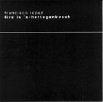
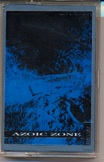
1. azoic zone [ • rec. 1993 ]mp3 excerpt | reviews[w/ David Myers, Illusion of Safety, John Hudak, Minóy, Zan Hoffman, Scot Konzelmann, Richard Franecki, Michael Gendreau, Steve Peters and John Wiggins]
> rel. 1993 - CD Geometrik, Spain ()
>> res. 2003 - CD Geometrik, Spain ()
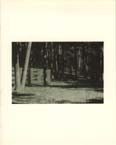
Francisco López "Azoic Zone" (CD - Geometrik, 2003)
Available now the re-release of the first Francisco López CD, Azoic Zone, published also by Geometrik 10 years ago and out of stock for several years. A work with the collaboration of many musicians from the 90Ls electronic network like David Myers, Illusion of Safety, Scot Konzelmann, John Hudak, Michael Gendreau, John Wiggings, Richard Franecki, Minoy Steve Peters, and Zan Hoffman.
Azoic Zone is a sonic experience inspired by the organisms of abyssal zones. A journey to an unknown world where the physical phenomena and the developoment of life processes follow aberrant guidelines of a crushing beauty. The profundity, the cold, the isolation of these underwater depths are reflected in a starling way in Azoic Zone, a work on life and death beyond the know world. Azoic Zone is for most of the first López followers one of his best works, where elements of his personal style can be found, even if in Azoic Zone we can also find certain traces of the post industrial music. Those who have known this artist from Madrid in the last years have now the opportunity of obtaining this basic work in his discography. Geometrik website (Spain, 2003)
Francisco López "Azoic Zone" (CD - Geometrik, 2003)
Francisco López has been active since the early '80s, participating in an international cassette network of musicians and sound artists exchanging and transforming each other's material. One of his first CD releases was this mail collaboration within the cassette network, which includes sound material by several other artists, including feedback artist David Myers (who released several CDs as Arcane Device), the Chicago-based noise group Illusion of Safety, and New Mexico soundscape artist Steve Peters. López' trademark, the all-encompassing drones, are present at every turn, but his sonic suppliers make their presence felt. "Calatheanthemum," for instance, contains rattling chains, metallic percussion, and loud pounding rhythms, almost like a train; and "Vibrational Trip" features gongs and loud screeching feedback events.
These sounds are outside López' typical vocabulary, but since López made the final mix, as well as supplied some original material himself, the product is recognizably his. Unsurprisingly, it is very difficult to identify any specific sounds that originated elsewhere. Overall the release has a fairly broad palette, with some tracks like "Anoxic Basins" being fairly quiet throughout, and others, most notably "Vibrational Trip," ranging from near silence to very loud. The titles refer to various organisms in the deepest abysses of the oceans, an appropriate title considering López' other career as a biologist, and an apt image for the mostly austere music on this release. Except for the Staalplaat single "Untitled (1981-1983)," this is the earliest López work to be released on CD. It is also one of the rare recorded examples of his collaborative efforts until the recent debut of his own label, .Absolute. All Music Guide (USA, 2003)
Available now the re-release of the first Francisco López CD, Azoic Zone, published also by Geometrik 10 years ago and out of stock for several years. A work with the collaboration of many musicians from the 90Ls electronic network like David Myers, Illusion of Safety, Scot Konzelmann, John Hudak, Michael Gendreau, John Wiggings, Richard Franecki, Minoy Steve Peters, and Zan Hoffman.
Azoic Zone is a sonic experience inspired by the organisms of abyssal zones. A journey to an unknown world where the physical phenomena and the developoment of life processes follow aberrant guidelines of a crushing beauty. The profundity, the cold, the isolation of these underwater depths are reflected in a starling way in Azoic Zone, a work on life and death beyond the know world. Azoic Zone is for most of the first López followers one of his best works, where elements of his personal style can be found, even if in Azoic Zone we can also find certain traces of the post industrial music. Those who have known this artist from Madrid in the last years have now the opportunity of obtaining this basic work in his discography. Geometrik website (Spain, 2003)
Francisco López "Azoic Zone" (CD - Geometrik, 2003)
Francisco López has been active since the early '80s, participating in an international cassette network of musicians and sound artists exchanging and transforming each other's material. One of his first CD releases was this mail collaboration within the cassette network, which includes sound material by several other artists, including feedback artist David Myers (who released several CDs as Arcane Device), the Chicago-based noise group Illusion of Safety, and New Mexico soundscape artist Steve Peters. López' trademark, the all-encompassing drones, are present at every turn, but his sonic suppliers make their presence felt. "Calatheanthemum," for instance, contains rattling chains, metallic percussion, and loud pounding rhythms, almost like a train; and "Vibrational Trip" features gongs and loud screeching feedback events.
These sounds are outside López' typical vocabulary, but since López made the final mix, as well as supplied some original material himself, the product is recognizably his. Unsurprisingly, it is very difficult to identify any specific sounds that originated elsewhere. Overall the release has a fairly broad palette, with some tracks like "Anoxic Basins" being fairly quiet throughout, and others, most notably "Vibrational Trip," ranging from near silence to very loud. The titles refer to various organisms in the deepest abysses of the oceans, an appropriate title considering López' other career as a biologist, and an apt image for the mostly austere music on this release. Except for the Staalplaat single "Untitled (1981-1983)," this is the earliest López work to be released on CD. It is also one of the rare recorded examples of his collaborative efforts until the recent debut of his own label, .Absolute. All Music Guide (USA, 2003)
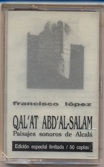
3. Qal'at Abd'al-Salam / O parladoiro desamortuxado [ • rec. 1993-1995 ]mp3 excerpt | reviews> rel. 1995 - CD Linea Alternativa, Spain
Francisco López "Qal'at Abd'al-Salam / O parladoiro desamortuxado" (CD - Linea Alternativa, 1995)
Francisco López's monumental catalogue of field recordings, ultra minimalism, and Zen-like barely modulating pure tone recordings is a daunting one to step into. This cd collects two distinct bodies of López' work with "Qal'at Abd'Al-Salam" (a loosely connected collection of field recordings of public spaces) and "O Parladoiro Desamortuxado" (fragments of highly textured noise pieces set against ultra quiet passages). Aquarius Records (USA), 2004
4. warszawa restaurant [ • rec. 1995 ]mp3 excerpt | reviews> rel. 1995 - CD Trente Oiseaux, Germany (website)
>> res. 1998 - CD Trente Oiseaux, Germany (website)
Francisco López "Warszawa Restaurant" (CD - Trente Oiseaux, 1995)
Francisco's first CD for TRENTE OISEAUX contains a dark, haunting soundscape in seven parts: far away resonances over dark waves, deep submarine space; like a magician, he suspends time with a slow gesture... Trente Oiseaux press release (Germany, 1995)
Francisco López "Warszawa Restaurant" (CD - Trente Oiseaux, 1995)
"Warszawa Restaurant" was one of the first albums to be released from the ultra-minimalist Francisco López back in 1995, though he provides hints that he has an immense amount of work that predates this album and has yet to be released. This is mostly from his ongoing "Untitled" series which begins with "Untitled 74" (one of his most unsuccessful works which happened to be released on Table of the Elements). Anyway, "Warszawa Restaurant" fits into López' ideas of manipulated any given acoustic space with the intrusion of increasingly powerful drones culled from environmental recordings. Air conditioning ducts, wind, the ambient din of a city, rainforests, run out grooves for vinyl, and of course death metal blast beats ("Untitled 108") have been some of sources for the textural recordings that López has manipulated into his dynamic compositions that blur the boundaries between silence and sound. For the most part, López doesn't wish his source material to be known... and "Warzawa Restaurant" delivers in the mystery department. Bleak swells of grey sounds slowly breathe and fluctuate out of periods of silence, with very little direct references to the world around us. Instead, this album forces the listener to concentrate on their auricular surroundings in an attempt to make us aware of his belief that the world itself is the most extravagant instrument known to man. Aquarius Records website (USA, 2003)
Francisco López "Warszawa Restaurant" (CD - Trente Oiseaux, 1995)
Clearly an overview and critical analysis of the entire Bernhard Gunter Trente Oiseaux series is in order at some point. For the López discs, they are both very characteristic of what he does and has been doing for many years now. Very low, quiet bass tones; white noise; imperceptible events; glass breaking subharmonics. Events not unlike the sound of nature without human intervention. Events not unlike mechanistic, human-machine creations that have crept into our every day lives and exist unchallenged as sonic environments. As far as recommending these discs, you really have to want to allow this type of listening into your world. Sit back with your refrigerator and maybe leave the door open to your house for a introductory sample. Maybe try reading John Cage's essential manifesto Silence to help open your ears. López's art speaks very much to me as a Cage-like listening challenge that has been proliferated since the early fifties by the likes of Morton Feldman, Earle Brown, Anna Lockwood, Alvin Lucier, and even today with Gunter and his cohorts in exploration. That is not to say it is not interesting or good; on the contrary, López's creations are quite compelling because of the mindset required for a truly deep-listening experience. I feel the best experience requires total submission - a submission not on the level of a Peter Brotzman tenor solo, wherein your are clobbered and pummeled into listening - but a submission that requires removal of one's self from one's surroundings to allow one's self to truly experience those surroundings. Sounds like psychedelic drugs, huh? Well, maybe that's what it takes for some people to get there. López is apparently trying to challenge that same notion Cage so eloquently revolutionized during the mid-century and continued to embark upon until his death: the experience of listening. It's not an argument about is it music or is it art. Those questions are long gone. It's both and neither. Most certainly it's a challenge to the audience. I never bought any age recordings because that was never really the point to me. The same goes for López, except that the Cagean bullshit concept of randomness is removed and replaced by an attempt for total environmental control. Of the two reviewed, Belle Confusion 966 is my favourite (and is perhaps one of my favourite of all the López I've been lucky enough to hear), primarily because of the length and slow development of the main 56 minute track. Think distant, sustained thunder storms and ambient room noise amplified, but kept at such a low volume, you are not sure where or if it is really happening. The second track is a curious 18-minute live piece that includes a decent level of volume (amplification) and events enhancing and augmenting the overall noise/drone. (Curious, however is the inclusion of an audience response of cheers and applause at the end, as if to indicate, "See, I can do this stuff live too; I am a composer" - such inclusions have always been suspect to me counter to the philosophy, perhaps; certainly challengeable). I really do like this stuff, but I think it's gotta be hard for a lot of people to swallow. It must be the sheer audacity of a disc with little to no perceptible events to the naked ear that ultimately impresses me. Yeah, I think that's it. www.info.net.nz/opprobrium (New Zealand, 2004)
Francisco's first CD for TRENTE OISEAUX contains a dark, haunting soundscape in seven parts: far away resonances over dark waves, deep submarine space; like a magician, he suspends time with a slow gesture... Trente Oiseaux press release (Germany, 1995)
Francisco López "Warszawa Restaurant" (CD - Trente Oiseaux, 1995)
"Warszawa Restaurant" was one of the first albums to be released from the ultra-minimalist Francisco López back in 1995, though he provides hints that he has an immense amount of work that predates this album and has yet to be released. This is mostly from his ongoing "Untitled" series which begins with "Untitled 74" (one of his most unsuccessful works which happened to be released on Table of the Elements). Anyway, "Warszawa Restaurant" fits into López' ideas of manipulated any given acoustic space with the intrusion of increasingly powerful drones culled from environmental recordings. Air conditioning ducts, wind, the ambient din of a city, rainforests, run out grooves for vinyl, and of course death metal blast beats ("Untitled 108") have been some of sources for the textural recordings that López has manipulated into his dynamic compositions that blur the boundaries between silence and sound. For the most part, López doesn't wish his source material to be known... and "Warzawa Restaurant" delivers in the mystery department. Bleak swells of grey sounds slowly breathe and fluctuate out of periods of silence, with very little direct references to the world around us. Instead, this album forces the listener to concentrate on their auricular surroundings in an attempt to make us aware of his belief that the world itself is the most extravagant instrument known to man. Aquarius Records website (USA, 2003)
Francisco López "Warszawa Restaurant" (CD - Trente Oiseaux, 1995)
Clearly an overview and critical analysis of the entire Bernhard Gunter Trente Oiseaux series is in order at some point. For the López discs, they are both very characteristic of what he does and has been doing for many years now. Very low, quiet bass tones; white noise; imperceptible events; glass breaking subharmonics. Events not unlike the sound of nature without human intervention. Events not unlike mechanistic, human-machine creations that have crept into our every day lives and exist unchallenged as sonic environments. As far as recommending these discs, you really have to want to allow this type of listening into your world. Sit back with your refrigerator and maybe leave the door open to your house for a introductory sample. Maybe try reading John Cage's essential manifesto Silence to help open your ears. López's art speaks very much to me as a Cage-like listening challenge that has been proliferated since the early fifties by the likes of Morton Feldman, Earle Brown, Anna Lockwood, Alvin Lucier, and even today with Gunter and his cohorts in exploration. That is not to say it is not interesting or good; on the contrary, López's creations are quite compelling because of the mindset required for a truly deep-listening experience. I feel the best experience requires total submission - a submission not on the level of a Peter Brotzman tenor solo, wherein your are clobbered and pummeled into listening - but a submission that requires removal of one's self from one's surroundings to allow one's self to truly experience those surroundings. Sounds like psychedelic drugs, huh? Well, maybe that's what it takes for some people to get there. López is apparently trying to challenge that same notion Cage so eloquently revolutionized during the mid-century and continued to embark upon until his death: the experience of listening. It's not an argument about is it music or is it art. Those questions are long gone. It's both and neither. Most certainly it's a challenge to the audience. I never bought any age recordings because that was never really the point to me. The same goes for López, except that the Cagean bullshit concept of randomness is removed and replaced by an attempt for total environmental control. Of the two reviewed, Belle Confusion 966 is my favourite (and is perhaps one of my favourite of all the López I've been lucky enough to hear), primarily because of the length and slow development of the main 56 minute track. Think distant, sustained thunder storms and ambient room noise amplified, but kept at such a low volume, you are not sure where or if it is really happening. The second track is a curious 18-minute live piece that includes a decent level of volume (amplification) and events enhancing and augmenting the overall noise/drone. (Curious, however is the inclusion of an audience response of cheers and applause at the end, as if to indicate, "See, I can do this stuff live too; I am a composer" - such inclusions have always been suspect to me counter to the philosophy, perhaps; certainly challengeable). I really do like this stuff, but I think it's gotta be hard for a lot of people to swallow. It must be the sheer audacity of a disc with little to no perceptible events to the naked ear that ultimately impresses me. Yeah, I think that's it. www.info.net.nz/opprobrium (New Zealand, 2004)
5. belle confusion 966 [ • rec. 1996 ]mp3 excerpt | reviews> rel. 1996 - CD Trente Oiseaux, Germany (website)
>> res. 1998 - CD Trente Oiseaux, Germany (website)
Francisco López "Belle Confusion 966" (CD - Trente Oiseaux, 1996)
A stunningly beautiful work by Francisco López - the CD contains the full 55 minutes studio version of the work, plus an 18 minutes excerpt of its live performance in Zurich, Switzerland, during the TRENTE OISEAUX "Alpine Tour '96". Trente Oiseaux press release (Germany, 1996)
6. Addy en el país de las frutas y los chunches [ • rec. 1996 ]mp3 excerpt | reviews> rel. 1997 - CD ND, USA
>> res. 2002 - CD Alien8 Recordings, Canada ()

Francisco López "Addy en el pais de las frutas y los chunches" (CD - Alien8 Recordings, 2002)
At this point an introduction hardly seems necessary. Madrid, Spain's Francisco López has developed his art over the last 20 some years to the point that he is rarely met or challenged. Much of this due to his ever-burgeoning collection of incredible releases on labels all over the world as well as a relentless schedule of concert, festival appearances and collaborations.
We have already presented two separate releases by López in his on-going series of untitled recordings: "untitled #104", the death metal release, and "untitled #123". We are very pleased to be able to announce the availability of the artist's most astonishing recorded work yet!"Addy en el país de las frutas y los chunches" was originally released in an edition of 500 copies on the ND label in 1997.
This release is most comparable to efforts that centered more on the environmental aspects of artist's work and is somewhat comparable to releases such as "La Selva" and "Untitled Music for Geography". "AddyS1" was the first American release by López and to this day remains the artist's favorite release.
The sound world created and captured by Francisco López on this recording is absolutely incredible, a beautifully horrifying listening experience. This could very possibly be one of the most important ambient records of the last 10 years and truly reinvents the concept of field recordings.
Without a doubt, this could easily serve as some of the most effective soundtrack music ever. This recording transcends mundane aural experiences. The listener will recognize many sounds but will have never quite heard them like this. It is environmental music without even the slightest influence of New Age. Far from it, this is much more in the area of massive drone music or even at times dark ambient. It should also be an important release for fans of electro-acoustic music. It is astonishing how many sounds are perceivable and coming from every direction. Listening to this in the dark would probably prove to be too mind bending for many people.
As you know by now, Alien8 Recordings greatly admires the work and vision of Francisco López. Having already released two previous recordings and having presented five live events, we couldn't be happier than the prospect of re-issuing one the artist's most substantial recorded offerings. We have reworked the packaging with the input of López and are pleased to that the reissue will be one of the few López release to feature full-colour artwork. Alien8 Recordings press release (Canada, January 2003)
Francisco López "Addy en el pais de las frutas y los chunches" (CD - Alien8 Recordings, 2002)
Francisco López is one of those artists who is amazingly prolific (he's released over 120 works on 80 different labels around the world), yet has also managed to stay pretty much under-the-radar in terms of how many people actually know about his work. An artist of many different conceptual themes and ideas, his work mainly falls under the minimal ambient / musique concrete category, but he brings a wide range of sound to the pallete, including (but not limited to) field recordings, digitally-manipulated sound, and even bits of acoustic instruments. He's recorded minimal deep-gong hits in an empty silo, has stacked layer upon layer of metal riffs for sheer dissonance, and has divided listeners worldwide with his approach (some of his works are downright inaudible for the majority of their running time).
Addy En El Pais De Las Frutas Y Los Chunches is actually a re-release of what many consider one of his best works, a super-dark rush of manipulated field recordings from Costa Rica, Buenos Aires, and a whole slew of other exotic locations. Any thoughts you may have of this simply being new-age background music that you could pick up from any tourist track are almost immediately quashed, as the disc dives into an abyss of slightly unsettling sounds and stays there for a majority of its 3 track, almost 60-minute running time.
Like some of his other releases, the disc starts with the sounds of what could have possibly been a field recording of a rainforest at one time. The album-titled track opens with the faint drone of an organic place before what sounds like a rumble of thunder rips through and a wall of noise comes rushing through. Though processed digitally (and retaining features of that), it sounds like the collected sounds of crickets, a rainstorm, a raging river, and other small life all pushing forward at some faster-than-evolutionary pace. Throughout the track, López takes away certain elements once in awhile to expose the others underneath, and just as you think the wall of sound will continue for too long, it drops off into quiet again, as if you were falling through the loud canopy and cacophony of sound before being submerged underwater and hearing everything continue above through the muffled liquid of your surroundings.
As I've already mentioned above, this is a minimal record. There are no melodies to hook you, and there isn't any percussion. It's the sampling of pure nature sounds and then turning them into something slightly different. López takes the sound of small bugs and makes them overwhelming, or amplifies the sound of a quiet stream of runoff, brining things to the foreground which would be relegated to tranquil background sounds on most enviromental releases. His study in extremes (both with the aformentioned tweaking, and with many dynamic shifts from quiet to loud) is one of the thing that sets him apart from other total ambient drifters. Even with the organic sounds, though, it's mostly uneasy listening as gutteral noises creep through subterrain passages and silent washes are overtaken with almost violent clambors of noise. Fans of more stripped-down work by Coil should take note, this is often times very creepy stuff. www.almostcool.org (2003)
Francisco López "Addy en el pais de las frutas y los chunches" (CD - Alien8 Recordings, 2002)
1. Blindfolded and whipped, from a sudden cacaphony, a burst of sound, then hollowed, echoed, thinned out, transient time ñ down to what appears, in the ears, to be silence: but it is other, it recognises the impossibility of degree zero sound, it is a quiet pool of sparse reflection. Humming the hymns of grating surfaces.
A subsumed trickle of extended low-frequency sinewaves produce a listening experience qualitatively different in accordance with the technology in use: from headphones, the reminiscent and treated, unrepresentable higher-frequency sounds weave overtop a deafening absence of silence as the headphone cones struggle to embody the shaved precision of a bass frequency that begins to twist and turn in only occasionally audible timbres. With proper studio monitors, the bass flutters the nerves, sets afire the body and redefines the arc of sound in the room. Keyboard taps become libretto to the omnipresent monstrosity of perfection found in this bass, the windows vibrate occassionally, and I lapse into dream.
2. Bees. Swarming, incapable of numerical calculation, pulsed by a repetitive thump, dangerous, backdrop against the jungle, one swarms closer. Thud is heartbeat. Double-pump pulse, increasing in tempo. Thinning out the horizon of breath. Breathing the bees into the lungs: sudden swallow opens, the world reduces its sound to thunder and rain.
The slow entrance of the bee and the heart dance quietly over a microscopic terrain designed to entrance the listener and extend movement. Like the previous piece, the listener turns up the volume in an attempt to hear the detail. Leaning forward and poised: the listener's body ñ bees. Then Thunder. Thunder of the gods, even, as my studio monitors performed 4" cone-movements in the re-articulation of the jungle's response to the haunting growl of the clouds.
3. The churning of a violent water, drawn from a windswept cave to the sudden and vicious movement ñ in all directions ñ of a tidepool facing a sudden rain, monsoon, the wrath of a god or of Aguirre. The supreme anarchic beauty of fluidic destruction.
None of this is represented in sound. The sounds are directly of the movement and motion of waves: water waves, sound waves: the two are one and the same, although the medium of transmission mediates the construction and reception ñ the limitless context ñ of the body's engagement with sound. Thus the difference between being there and becoming the sound through sine waves is the dance of the body. The body serves as waystation of difference. It is the difference in sound itself ñ and so we all hear this CD differently.
4. Purely not theoretical conjecture, the final end of this CD corresponds to López's performances: the ever-increasing sound, the lulls and dips of the chartography carved out in curves and swathes of field recordings, treated with an elemental conceptual debt to intuitive precision, then CUT. www.dustedmagazine.com (2003)
Francisco López "Addy en el pais de las frutas y los chunches" (CD - Alien8 Recordings, 2002)
Far from being one of the many Francisco López albums of inaudible activity and near silence, "Addy En Elpais De Las Frutas Y Los Chunches" is an epic construction of densely layered field recordings. Originally released in an edition of 500 copies on ND back in 1997, this album has been long out of print. However, López' insistence of this being his favorite composition to date perhaps prompted Alien 8 to pull this title back into circulation. Despite the obviousness to López' source material (i.e. wind, rain storms, cricket choruses, and other natural phenomenon), the strategies that he uses to collage all of these materials are wholly synthetic and purposefully theatrical. So much so, that Allan thought this was an experimental track from the pummelling necro-metal outfit Anaal Nathrakh! Indeed, López has amplified the horrific elements of these natural sounds, extending his definition of 'acousmatic music' as not simply disguising the source material but rendering it hallucinatory, vertiginous, and ominous. The album opens with an unrelenting wall of sound that surges forward in a startling jolt of mechanical screeches and insect choruses that are more electrical than natural. López ramps the volume and bass equilization of these sounds up to a tumultuous crescendo of furious noise some five or six minutes later, only to abruptly cut to a quiet murky wash of miasmic swirling. Come to think of it, these strategies have much more in common with Illusion Of Safety or The Hafler Trio than the sensorially smooth transitions that have become so prominent in recent López works (especially in the "Belle Confusion" series). Regardless of any precedents, "Addy En Elpais De Las Frutas Y Los Chunches" definitely qualifies as one of López' masterpieces. Aquarius Records website (USA, 2003)
Francisco López "Addy en el pais de las frutas y los chunches" (CD - Alien8 Recordings, 2002)
On the subject of older López works it's nice to see an older release of his out again. 'Addy' was released in 1997 by the ND label (whatever happened to them?) in an edition of 500 copies and was one of the first Francisco López CDs to appear and has been out of print for quite some time. Like 'Wasps' this is López on a mission. Many of his 'Untitled' works are pieces of studio music, in which López doesn't want to tell you anything about his sources or motivations - it's what ever you decide with them. In just a few works, 'Wasps' but also 'La Selva' or 'Buildings [New York]' he lets us in on the recorded subject; so is the case with 'Addy'. Like 'La Selva' it contains recordings made in the Costa Rican rainforest. It would be easy to mistake this music for New Age, but it's not. López records the sounds of the rain forest, but he treats them in the studio. In the title piece he builts a collage of sounds, with sudden changes (something that you won't see him doing on his recent works) and movements. The long piece 'Piloconsor, Tres Mitocondrias Y Lucha Por El Liquido Emporante' forcasts the later López work of sheer inaudibility whereas the final piece sounds like a true López piece: dark drone like sounds of (maybe) wind blowing or a heavily processed (probably not) rainfall. 'Addy' is indeed a great work, which is good to see re-issued. It displays the various sides of López' work, nature recordings and silence and should be a good introduction for anyone. (FdW) Vital Magazine (The Netherrlands, 2003)
Francisco López "Addy en el pais de las frutas y los chunches" (CD - Alien8 Recordings, 2002)
all the sounds on this cd come from field recordings made by lópez, a spanish scientist and sound researcher, in costa rica. he is an anti-structuralist with a goal of "reaching an ideal of absolute concrète music" and a modus operandi of exploring the "universe of >broad-band noise" which surrounds us. his take on this however can be somewhat startling! the second track, snappily titled "piloconsor, tres mitocondrias y la lucha por el liquido emporante" or "piloconsor, three mitochondrions and the fight for the emporant liquid" weighs in at a little over 25 minutes and is pretty much inaudible. well if you want to set the volume at 10 then weird fluttering sounds escape from the speakers but that's pretty much hit. it does have an undoubted charm about and is an interesting experiment into environmental recordings. maybe not so much fun if you shelled out 12 notes for it, from a limited budget. mine was, however, free and >from that stand point, i love the track. as an example of the absence of sound, what is left out, being more important than the selection of sounds that go to form the finished track. the other two tracks, again with hilariously long titles, are coherent and more audible assemblages from lópez's extensive range of costa rican field recordings. there are some thirty locations listed on the sleeve. these include the poas, arenal and irazu volcanoes, the tapanti, monteverde and rara avis reserves, the la selva biological station, the braulio carrillo, rincon de la vieja, toruguero, cahuita and corcovado national parks plus a number of city locations including san jose, puerto viejo & san pedro. sounds float or pour from the speakers. the noise of a thousand insects clashes with the sound of tumbling water which in turn battles with the ominous rumbling of an erupting volcano. if you want a reference point, i would direct you towards jim o'rourke's 'rules of reduction' 3" cd on metamkine. but with the mechanical and man made noises of o'rourke's paris field recordings, substituted for the insectoid and elemental sounds of (lópez's) costa rica. www.kingwho.com (2004)
At this point an introduction hardly seems necessary. Madrid, Spain's Francisco López has developed his art over the last 20 some years to the point that he is rarely met or challenged. Much of this due to his ever-burgeoning collection of incredible releases on labels all over the world as well as a relentless schedule of concert, festival appearances and collaborations.
We have already presented two separate releases by López in his on-going series of untitled recordings: "untitled #104", the death metal release, and "untitled #123". We are very pleased to be able to announce the availability of the artist's most astonishing recorded work yet!"Addy en el país de las frutas y los chunches" was originally released in an edition of 500 copies on the ND label in 1997.
This release is most comparable to efforts that centered more on the environmental aspects of artist's work and is somewhat comparable to releases such as "La Selva" and "Untitled Music for Geography". "AddyS1" was the first American release by López and to this day remains the artist's favorite release.
The sound world created and captured by Francisco López on this recording is absolutely incredible, a beautifully horrifying listening experience. This could very possibly be one of the most important ambient records of the last 10 years and truly reinvents the concept of field recordings.
Without a doubt, this could easily serve as some of the most effective soundtrack music ever. This recording transcends mundane aural experiences. The listener will recognize many sounds but will have never quite heard them like this. It is environmental music without even the slightest influence of New Age. Far from it, this is much more in the area of massive drone music or even at times dark ambient. It should also be an important release for fans of electro-acoustic music. It is astonishing how many sounds are perceivable and coming from every direction. Listening to this in the dark would probably prove to be too mind bending for many people.
As you know by now, Alien8 Recordings greatly admires the work and vision of Francisco López. Having already released two previous recordings and having presented five live events, we couldn't be happier than the prospect of re-issuing one the artist's most substantial recorded offerings. We have reworked the packaging with the input of López and are pleased to that the reissue will be one of the few López release to feature full-colour artwork. Alien8 Recordings press release (Canada, January 2003)
Francisco López "Addy en el pais de las frutas y los chunches" (CD - Alien8 Recordings, 2002)
Francisco López is one of those artists who is amazingly prolific (he's released over 120 works on 80 different labels around the world), yet has also managed to stay pretty much under-the-radar in terms of how many people actually know about his work. An artist of many different conceptual themes and ideas, his work mainly falls under the minimal ambient / musique concrete category, but he brings a wide range of sound to the pallete, including (but not limited to) field recordings, digitally-manipulated sound, and even bits of acoustic instruments. He's recorded minimal deep-gong hits in an empty silo, has stacked layer upon layer of metal riffs for sheer dissonance, and has divided listeners worldwide with his approach (some of his works are downright inaudible for the majority of their running time).
Addy En El Pais De Las Frutas Y Los Chunches is actually a re-release of what many consider one of his best works, a super-dark rush of manipulated field recordings from Costa Rica, Buenos Aires, and a whole slew of other exotic locations. Any thoughts you may have of this simply being new-age background music that you could pick up from any tourist track are almost immediately quashed, as the disc dives into an abyss of slightly unsettling sounds and stays there for a majority of its 3 track, almost 60-minute running time.
Like some of his other releases, the disc starts with the sounds of what could have possibly been a field recording of a rainforest at one time. The album-titled track opens with the faint drone of an organic place before what sounds like a rumble of thunder rips through and a wall of noise comes rushing through. Though processed digitally (and retaining features of that), it sounds like the collected sounds of crickets, a rainstorm, a raging river, and other small life all pushing forward at some faster-than-evolutionary pace. Throughout the track, López takes away certain elements once in awhile to expose the others underneath, and just as you think the wall of sound will continue for too long, it drops off into quiet again, as if you were falling through the loud canopy and cacophony of sound before being submerged underwater and hearing everything continue above through the muffled liquid of your surroundings.
As I've already mentioned above, this is a minimal record. There are no melodies to hook you, and there isn't any percussion. It's the sampling of pure nature sounds and then turning them into something slightly different. López takes the sound of small bugs and makes them overwhelming, or amplifies the sound of a quiet stream of runoff, brining things to the foreground which would be relegated to tranquil background sounds on most enviromental releases. His study in extremes (both with the aformentioned tweaking, and with many dynamic shifts from quiet to loud) is one of the thing that sets him apart from other total ambient drifters. Even with the organic sounds, though, it's mostly uneasy listening as gutteral noises creep through subterrain passages and silent washes are overtaken with almost violent clambors of noise. Fans of more stripped-down work by Coil should take note, this is often times very creepy stuff. www.almostcool.org (2003)
Francisco López "Addy en el pais de las frutas y los chunches" (CD - Alien8 Recordings, 2002)
1. Blindfolded and whipped, from a sudden cacaphony, a burst of sound, then hollowed, echoed, thinned out, transient time ñ down to what appears, in the ears, to be silence: but it is other, it recognises the impossibility of degree zero sound, it is a quiet pool of sparse reflection. Humming the hymns of grating surfaces.
A subsumed trickle of extended low-frequency sinewaves produce a listening experience qualitatively different in accordance with the technology in use: from headphones, the reminiscent and treated, unrepresentable higher-frequency sounds weave overtop a deafening absence of silence as the headphone cones struggle to embody the shaved precision of a bass frequency that begins to twist and turn in only occasionally audible timbres. With proper studio monitors, the bass flutters the nerves, sets afire the body and redefines the arc of sound in the room. Keyboard taps become libretto to the omnipresent monstrosity of perfection found in this bass, the windows vibrate occassionally, and I lapse into dream.
2. Bees. Swarming, incapable of numerical calculation, pulsed by a repetitive thump, dangerous, backdrop against the jungle, one swarms closer. Thud is heartbeat. Double-pump pulse, increasing in tempo. Thinning out the horizon of breath. Breathing the bees into the lungs: sudden swallow opens, the world reduces its sound to thunder and rain.
The slow entrance of the bee and the heart dance quietly over a microscopic terrain designed to entrance the listener and extend movement. Like the previous piece, the listener turns up the volume in an attempt to hear the detail. Leaning forward and poised: the listener's body ñ bees. Then Thunder. Thunder of the gods, even, as my studio monitors performed 4" cone-movements in the re-articulation of the jungle's response to the haunting growl of the clouds.
3. The churning of a violent water, drawn from a windswept cave to the sudden and vicious movement ñ in all directions ñ of a tidepool facing a sudden rain, monsoon, the wrath of a god or of Aguirre. The supreme anarchic beauty of fluidic destruction.
None of this is represented in sound. The sounds are directly of the movement and motion of waves: water waves, sound waves: the two are one and the same, although the medium of transmission mediates the construction and reception ñ the limitless context ñ of the body's engagement with sound. Thus the difference between being there and becoming the sound through sine waves is the dance of the body. The body serves as waystation of difference. It is the difference in sound itself ñ and so we all hear this CD differently.
4. Purely not theoretical conjecture, the final end of this CD corresponds to López's performances: the ever-increasing sound, the lulls and dips of the chartography carved out in curves and swathes of field recordings, treated with an elemental conceptual debt to intuitive precision, then CUT. www.dustedmagazine.com (2003)
Francisco López "Addy en el pais de las frutas y los chunches" (CD - Alien8 Recordings, 2002)
Far from being one of the many Francisco López albums of inaudible activity and near silence, "Addy En Elpais De Las Frutas Y Los Chunches" is an epic construction of densely layered field recordings. Originally released in an edition of 500 copies on ND back in 1997, this album has been long out of print. However, López' insistence of this being his favorite composition to date perhaps prompted Alien 8 to pull this title back into circulation. Despite the obviousness to López' source material (i.e. wind, rain storms, cricket choruses, and other natural phenomenon), the strategies that he uses to collage all of these materials are wholly synthetic and purposefully theatrical. So much so, that Allan thought this was an experimental track from the pummelling necro-metal outfit Anaal Nathrakh! Indeed, López has amplified the horrific elements of these natural sounds, extending his definition of 'acousmatic music' as not simply disguising the source material but rendering it hallucinatory, vertiginous, and ominous. The album opens with an unrelenting wall of sound that surges forward in a startling jolt of mechanical screeches and insect choruses that are more electrical than natural. López ramps the volume and bass equilization of these sounds up to a tumultuous crescendo of furious noise some five or six minutes later, only to abruptly cut to a quiet murky wash of miasmic swirling. Come to think of it, these strategies have much more in common with Illusion Of Safety or The Hafler Trio than the sensorially smooth transitions that have become so prominent in recent López works (especially in the "Belle Confusion" series). Regardless of any precedents, "Addy En Elpais De Las Frutas Y Los Chunches" definitely qualifies as one of López' masterpieces. Aquarius Records website (USA, 2003)
Francisco López "Addy en el pais de las frutas y los chunches" (CD - Alien8 Recordings, 2002)
On the subject of older López works it's nice to see an older release of his out again. 'Addy' was released in 1997 by the ND label (whatever happened to them?) in an edition of 500 copies and was one of the first Francisco López CDs to appear and has been out of print for quite some time. Like 'Wasps' this is López on a mission. Many of his 'Untitled' works are pieces of studio music, in which López doesn't want to tell you anything about his sources or motivations - it's what ever you decide with them. In just a few works, 'Wasps' but also 'La Selva' or 'Buildings [New York]' he lets us in on the recorded subject; so is the case with 'Addy'. Like 'La Selva' it contains recordings made in the Costa Rican rainforest. It would be easy to mistake this music for New Age, but it's not. López records the sounds of the rain forest, but he treats them in the studio. In the title piece he builts a collage of sounds, with sudden changes (something that you won't see him doing on his recent works) and movements. The long piece 'Piloconsor, Tres Mitocondrias Y Lucha Por El Liquido Emporante' forcasts the later López work of sheer inaudibility whereas the final piece sounds like a true López piece: dark drone like sounds of (maybe) wind blowing or a heavily processed (probably not) rainfall. 'Addy' is indeed a great work, which is good to see re-issued. It displays the various sides of López' work, nature recordings and silence and should be a good introduction for anyone. (FdW) Vital Magazine (The Netherrlands, 2003)
Francisco López "Addy en el pais de las frutas y los chunches" (CD - Alien8 Recordings, 2002)
all the sounds on this cd come from field recordings made by lópez, a spanish scientist and sound researcher, in costa rica. he is an anti-structuralist with a goal of "reaching an ideal of absolute concrète music" and a modus operandi of exploring the "universe of >broad-band noise" which surrounds us. his take on this however can be somewhat startling! the second track, snappily titled "piloconsor, tres mitocondrias y la lucha por el liquido emporante" or "piloconsor, three mitochondrions and the fight for the emporant liquid" weighs in at a little over 25 minutes and is pretty much inaudible. well if you want to set the volume at 10 then weird fluttering sounds escape from the speakers but that's pretty much hit. it does have an undoubted charm about and is an interesting experiment into environmental recordings. maybe not so much fun if you shelled out 12 notes for it, from a limited budget. mine was, however, free and >from that stand point, i love the track. as an example of the absence of sound, what is left out, being more important than the selection of sounds that go to form the finished track. the other two tracks, again with hilariously long titles, are coherent and more audible assemblages from lópez's extensive range of costa rican field recordings. there are some thirty locations listed on the sleeve. these include the poas, arenal and irazu volcanoes, the tapanti, monteverde and rara avis reserves, the la selva biological station, the braulio carrillo, rincon de la vieja, toruguero, cahuita and corcovado national parks plus a number of city locations including san jose, puerto viejo & san pedro. sounds float or pour from the speakers. the noise of a thousand insects clashes with the sound of tumbling water which in turn battles with the ominous rumbling of an erupting volcano. if you want a reference point, i would direct you towards jim o'rourke's 'rules of reduction' 3" cd on metamkine. but with the mechanical and man made noises of o'rourke's paris field recordings, substituted for the insectoid and elemental sounds of (lópez's) costa rica. www.kingwho.com (2004)
7. untitled #74 [ • rec. 1997 ]mp3 excerpt | reviews> rel. 1997 - CD Table of the Elements, USA
>> res. 2003 - CD Authorised Version, UK ()
Francisco López "untitled #74" (CD - Authorised Version, 2003)
'Untitled 74' is a classic López work. Opening up with minutes and minutes of silence, it reaches it's first peak at twelve minutes. But be warned this is a relatively soft peak and the piece turns into a loud beast, towards the thirty-seven minute range. If you cranked your volume level way up for the first bit, then this section will be speaker crashing one. Ranging from way way below the threshold of hearing to a solid zero db at that point: this is what makes this López CD such a classic disc. I'd be one of the last persons to say that one needs all López CD's. But if you want a good reference to his 'silent' pieces, I'd say this is one to have... Vital Weekly (The Netherlands), 2004
Francisco López "untitled #74" (CD - Authorised Version, 2003)
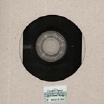
In reflecting silence, anti-music, soundspace and the disappearance of sound, Madrid composer Francisco López pushes his work further than anyone else in the realm of electronic music. Untitled 74 is his most forceful step yet towards a music of absolutes; an uncompromising, unique work featuring an immense perceptual range that will challenge even the most experienced listener." The most minimalist TOTE packaging yet: clear slimline jewelcase, plain aluminum disc, and a clear acetate insert giving only the artist & title for information. Forced Exposure (USA), 2004
'Untitled 74' is a classic López work. Opening up with minutes and minutes of silence, it reaches it's first peak at twelve minutes. But be warned this is a relatively soft peak and the piece turns into a loud beast, towards the thirty-seven minute range. If you cranked your volume level way up for the first bit, then this section will be speaker crashing one. Ranging from way way below the threshold of hearing to a solid zero db at that point: this is what makes this López CD such a classic disc. I'd be one of the last persons to say that one needs all López CD's. But if you want a good reference to his 'silent' pieces, I'd say this is one to have... Vital Weekly (The Netherlands), 2004
Francisco López "untitled #74" (CD - Authorised Version, 2003)
In reflecting silence, anti-music, soundspace and the disappearance of sound, Madrid composer Francisco López pushes his work further than anyone else in the realm of electronic music. Untitled 74 is his most forceful step yet towards a music of absolutes; an uncompromising, unique work featuring an immense perceptual range that will challenge even the most experienced listener." The most minimalist TOTE packaging yet: clear slimline jewelcase, plain aluminum disc, and a clear acetate insert giving only the artist & title for information. Forced Exposure (USA), 2004
8. untitled music for Geography [ • rec. 1997 ]mp3 excerpt | reviews> rel. 1997 - CD Sedimental, USA ()
Francisco López "untitled music for Geography" (CD - Sedimental, 1997)
Slow moving shadowy drones drifting through space. composed for the dance theater work by the Ralph Lemon Company. beautiful and austere black slimline packaging. Sedimental press release (USA, 1997)
9. Temizlemek [ • rec. 1994-1997 ]mp3 excerpt | reviews> rel. 1998 - double CD Línea Alternativa, Spain
Francisco López "Temizlemek" (CD - Linea Alternativa, 1998)
In answer to the first question... yes, you can hear this López record. When the often inaudible Francisco López gets audible, the results are some of more interesting manipulations of field recordings (along with L. Chasse, John Hudak, and Giancarlo Toniutti). And this double cd may be the best work that we have encountered. Slow burning drones layered from undefined yet organic source material lull beautifully within all of the disperate textures. Recommended. Aquarius Records website (USA, 2003)
10. la selva [ • rec. 1997 ]mp3 excerpt | reviews> rel. 1998 - V2_Archief, The Netherlands ()
>> res. 2001 - CD V2_Archief, The Netherlands ()
Francisco López "La Selva" (CD - V2_Archief, 1998)
Enter the heart of the sounding world with this incredibly varied and vivid release. López is interested in the act of "profound listening" to pure sound, without focus on its source or context. Thus for him the Costa Rican rainforest offers an opportunity for an intense immersion in multi-layered and multi-textured soundings quite unlike most rainforest discs. While it is structured as an unbroken day cycle, and can be heard as simply an extraordinary rainforest CD, López's quest for sonic immersion offers much more. He presents an unending stream of remarkable sonic moments, flowing together into a cohesive and transformative sonic journey, full of subtle relationships that are revealed upon deep, repeated listening. Forced Exposure (USA), 2004.
Francisco López "Belle Confusion 969" (CD, Sonoris - France)
"His source material may be exclusively terrestrial, but the quality of sound that Francisco López distills from his recordings of tropical and subtropical rainforests is almost preternatural. The third in a series of similarly titled projects, Belle Confusion 969 stands out among López's works as a relatively "unpopulated" piece wherein environmental sounds captured on several continents are fashioned into fabric that reveals an anthropomorphized Earth in its details. Against an unquiet background of geophysical rumbles, ringing drones, meteorological activity, and piercing insect noise, the 51-minute piece surveys the craggy, weather worn surfaces of exposed rock formations, traces eroded ground-forms, and plumbs the inky bowels of natural pools and abysses. López's triumph is his ability to invest what might have been a detached anatomical study of faceless artificial landscape with suspense, dramatic depth, and remarkably expressive musical character." (DUTCH EAST INDIA)
Francisco López "Belle Confusion 969" (CD, Sonoris - France)
Well I always considered our planet as only real noise universe. Francisco López is working in the field of environmental music since early 80s, and his works are ranging from shear radical anti-structural noise of various small life forms to ultra minimal broad-band noise often reduced to silence. "Belle Confusion 969" was recorded at various locations like forests of Brazil, Argentina, Venezuela and Costa Rica and featuring one long track of evolving noisescapes. Extreme amplitudes followed by extreme velocities, sounds dissolving and gathering together like worms.www.chat.ru/~svalemor/l_.htm#3
"His source material may be exclusively terrestrial, but the quality of sound that Francisco López distills from his recordings of tropical and subtropical rainforests is almost preternatural. The third in a series of similarly titled projects, Belle Confusion 969 stands out among López's works as a relatively "unpopulated" piece wherein environmental sounds captured on several continents are fashioned into fabric that reveals an anthropomorphized Earth in its details. Against an unquiet background of geophysical rumbles, ringing drones, meteorological activity, and piercing insect noise, the 51-minute piece surveys the craggy, weather worn surfaces of exposed rock formations, traces eroded ground-forms, and plumbs the inky bowels of natural pools and abysses. López's triumph is his ability to invest what might have been a detached anatomical study of faceless artificial landscape with suspense, dramatic depth, and remarkably expressive musical character." (DUTCH EAST INDIA)
Francisco López "Belle Confusion 969" (CD, Sonoris - France)
Well I always considered our planet as only real noise universe. Francisco López is working in the field of environmental music since early 80s, and his works are ranging from shear radical anti-structural noise of various small life forms to ultra minimal broad-band noise often reduced to silence. "Belle Confusion 969" was recorded at various locations like forests of Brazil, Argentina, Venezuela and Costa Rica and featuring one long track of evolving noisescapes. Extreme amplitudes followed by extreme velocities, sounds dissolving and gathering together like worms.www.chat.ru/~svalemor/l_.htm#3
12. untitled [1981-1983] [ • rec. 1981-1983 ]mp3 excerpt | reviews> rel. 1999 - mini CD, Staalplaat, The Netherlands ()

Francisco López "untitled (1981-83)" (CD - Staalplaat, 1999)
Very, very minimal, almost silent (but there is something way down there) soundworks recorded 1981-83 and remastered 1998. packed in a slimline case with no artwork. limited edition of 250. Staalplaat press release (The Netherlands, 1999)
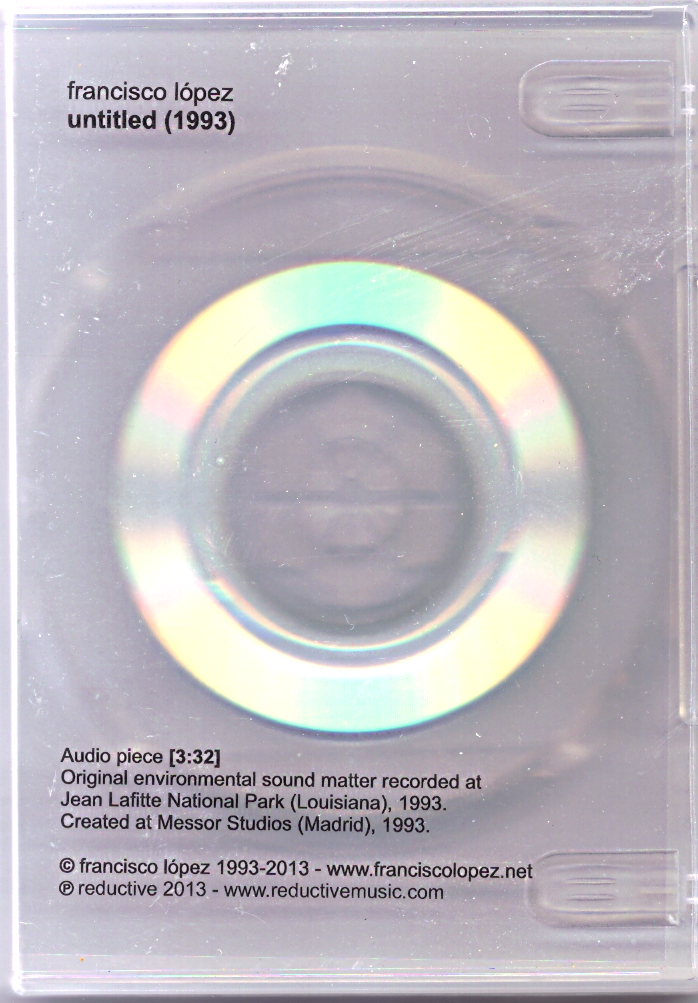
13. untitled (1993) [ • rec. 1996 ]mp3 excerpt | reviews[w/ Michael Gendreau, Zan Hoffman, Michael Northam, John Hudak, Gen Ken Montgomery and Steve Peters]
> rel. 1999 - CD Staalplaat, The Netherlands ()

Francisco López "untitled (1993)" (CD - Staalplaat, 1999)
Drone material, processing of sounds from the rainforest and other environmental recordings. Starts on track 6 to pick up where his last Staalplaat CD left off. in silk-screened slimline case.
Five excerpts from his U.S. concert tour of 1993, where in each city he collaborated with local artists including Michael Gendreau (Crawling With Tarts), Zan Hoffman, John Hudak, Gen Ken Montgomery, Michael Northam, and Steve Peters. Staalplaat press release (The Netherlands, 1999)
Francisco López "untitled (1993)" (CD - Staalplaat, 1999)
Some time back, AQ prankster Andee thought it funny to put a empty jewel case out on the shelves with a tag stating that the audio content was so minimal that it didn't even exist. Little did we know that this high art/bad joke concept was paralleled by the very first Reynols record -- which was a 'dematerialized' cd. With that lengthy precursor, we are happy to say that this Francisco López record is NOT another in the continuum of sub-audible recordings. Rather "Untitled (1993)" is a collection of live collaborations between López and a handful of guests (John Hudak, Michael Gendreau, Michale Northam, Gen Ken Montgomery, Steve Peters, and Zan Hoffmann). López manages to corral all of the diverse aesthetics of these artists into the more audible spectrum of his own sound of lengthy environmental drones. Like all of the records you actually can hear by López, "Untitled (1993)" is pretty fantastic. Aquarius Records website (USA, 2003)
Drone material, processing of sounds from the rainforest and other environmental recordings. Starts on track 6 to pick up where his last Staalplaat CD left off. in silk-screened slimline case.
Five excerpts from his U.S. concert tour of 1993, where in each city he collaborated with local artists including Michael Gendreau (Crawling With Tarts), Zan Hoffman, John Hudak, Gen Ken Montgomery, Michael Northam, and Steve Peters. Staalplaat press release (The Netherlands, 1999)
Francisco López "untitled (1993)" (CD - Staalplaat, 1999)
Some time back, AQ prankster Andee thought it funny to put a empty jewel case out on the shelves with a tag stating that the audio content was so minimal that it didn't even exist. Little did we know that this high art/bad joke concept was paralleled by the very first Reynols record -- which was a 'dematerialized' cd. With that lengthy precursor, we are happy to say that this Francisco López record is NOT another in the continuum of sub-audible recordings. Rather "Untitled (1993)" is a collection of live collaborations between López and a handful of guests (John Hudak, Michael Gendreau, Michale Northam, Gen Ken Montgomery, Steve Peters, and Zan Hoffmann). López manages to corral all of the diverse aesthetics of these artists into the more audible spectrum of his own sound of lengthy environmental drones. Like all of the records you actually can hear by López, "Untitled (1993)" is pretty fantastic. Aquarius Records website (USA, 2003)
Francisco López "Untitled #89" (CD, Or - UK)
"Untitled #89" is next part of ongoing series of untitled albums, started from "silent" Drone Records EP. This one is more atmospheric, and starts after 1.5 minute pause. Very minimal, but intense "natural" noise, evolving from silence to peak and then back from peak to silence. This work have strong hypnotic quality - if you're able to listen carefully and attentively, you'll find yourself in the state of flux. Currently López is very prolific composer - watch for his new works released via Staalplaat and Linea Alternativa. www.chat.ru/~svalemor/l_.htm#3
Francisco López "Untitled #89" (CD, Or - UK)
"Always far more contentious than his constructed forest and ocean soundscapes, López's clear-cased "untitled" works also tend to be vastly more rewarding. These "absolute concrète music" pieces dissolve the margi between background and foreground listening, expressing a silvery sort of anti-music defined by gradations so subtle that they can seem obstinate and all-but-imperceptible. #89 plays against López's infamous timbres-of-silence reputation. It is, instead, very much kin to his notoriously assaultive liv performances. The nature of the sonic beast that is #89, an advancing, expanding, voracious vacuum-like erasure that gains in strength while consuming its own nothingness - presents a paradox to confound physicists and philosophers alike. Beware this dangerous disc. López steadily turns (and tunes) the air within your ears against you, creating a sensation of internal pressure so overwhelming and unbearable that you read the 41:25 counter on the CD player with the sheer terror of knowing that 17 minutes of mounting, temple-splitting agony remain. Just when it seems that untitled #89's could/should have been qualified as a deadly weapon, the piece plummets to barely stirred quiet of exquisite, palliative tenderness. But the damage is done , the stilled roar still growing and growling within your head at an excruciating volume. You'll be amazed (and not just a little relieved) not to find blood dribbling from your ears. untitled #89 probably won't kill you, but it will make you wary of sonicists who come bearing the gifts of "silence". Phenomenal." (DUTCH EAST INDIA)
Francisco López "Untitled #89" (CD Or, UK, 1999)
For the uninitiated, Francisco López is a sound artist who has released records on more than 50 labels world-wide. His electro-acoustic compositions are intended "to reach an absolute ideal of absolute concrete music." For this, he has made field recordings on four continents in nearly 30 countries. Of the several CD's I've heard of his, Untitled #89 sticks pretty close to what's become an aesthetic; silence merges almost imperceptibly into unrecognizable sound which then segues again as the volume increases and the tones transform and evolve. The glacier paced crescendo builds to an almost unbearable climax; in this way López forces the listener to confront the relation of time to sound and perceptual awareness-or simply bail. Imagine the inner workings of a steel mill as Boeing 767 backs in the side door and you begin to get an idea of what Untitled #89 sounds like. But, then, that's not quite it. This is minimal, sonic sculpture that'll fire your synapses as it crumples your spine. (Your Flesh Magazine #44) (2001)
Francisco López "Untitled #89" (CD Or, UK, 1999)
Creating more than 90 recordings of his uniquely personal electro-acoustic soundworlds during the past 18 years, Francisco López has long been known to utilize silence as part of his aural constructions. Silence and near-silence, as well as intensely powerful walls of noise, are part of Untitled #89 which presents almost one hour of unknowable sonic presences which evolve... very gradually.
With a barely perceptible crawl in from silence, softly mechanical drones begin to appear, rippling with a radiant, ever-building hum. Resounding like distant plane engines (with perhaps a grinder or two in operation), the texture thickens and strengthens, small details becoming clearer though never gaining full focus. Various rings, pings, insectoid chatter and/or faraway train horns seem to (maybe) appear and disappear, miragelike amid the undeniable, droning vortex.
By the 28-minute mark, the endlessly churning mass thrums like a drastically overworked transformer ready to explode in a tornado-stricken industrial zone. The relentless stream slooowly grows louder and louder still, consuming all with its abrasive force... the ears shudder at the imensity of this unrestrained blast until, at 41:25... it suddenly stops.
But, no... as ears adjust... ever-so-faintly, a residual microdrone continues to steadily waver in near-silence. These almost invisible rays of sound bask in their own time and space, reminding us that the power is still there, until even they fade away.
To be sure, not everyone will appreciate Francisco López' sonic foray into this blend of extremes... but for those into texural drones, Untitled #89 is a must-have masterwork. I personally can appreciate it to a buzzing 8.3... (Spiderbytes, USA - March 2001)
"Untitled #89" is next part of ongoing series of untitled albums, started from "silent" Drone Records EP. This one is more atmospheric, and starts after 1.5 minute pause. Very minimal, but intense "natural" noise, evolving from silence to peak and then back from peak to silence. This work have strong hypnotic quality - if you're able to listen carefully and attentively, you'll find yourself in the state of flux. Currently López is very prolific composer - watch for his new works released via Staalplaat and Linea Alternativa. www.chat.ru/~svalemor/l_.htm#3
Francisco López "Untitled #89" (CD, Or - UK)
"Always far more contentious than his constructed forest and ocean soundscapes, López's clear-cased "untitled" works also tend to be vastly more rewarding. These "absolute concrète music" pieces dissolve the margi between background and foreground listening, expressing a silvery sort of anti-music defined by gradations so subtle that they can seem obstinate and all-but-imperceptible. #89 plays against López's infamous timbres-of-silence reputation. It is, instead, very much kin to his notoriously assaultive liv performances. The nature of the sonic beast that is #89, an advancing, expanding, voracious vacuum-like erasure that gains in strength while consuming its own nothingness - presents a paradox to confound physicists and philosophers alike. Beware this dangerous disc. López steadily turns (and tunes) the air within your ears against you, creating a sensation of internal pressure so overwhelming and unbearable that you read the 41:25 counter on the CD player with the sheer terror of knowing that 17 minutes of mounting, temple-splitting agony remain. Just when it seems that untitled #89's could/should have been qualified as a deadly weapon, the piece plummets to barely stirred quiet of exquisite, palliative tenderness. But the damage is done , the stilled roar still growing and growling within your head at an excruciating volume. You'll be amazed (and not just a little relieved) not to find blood dribbling from your ears. untitled #89 probably won't kill you, but it will make you wary of sonicists who come bearing the gifts of "silence". Phenomenal." (DUTCH EAST INDIA)
Francisco López "Untitled #89" (CD Or, UK, 1999)
For the uninitiated, Francisco López is a sound artist who has released records on more than 50 labels world-wide. His electro-acoustic compositions are intended "to reach an absolute ideal of absolute concrete music." For this, he has made field recordings on four continents in nearly 30 countries. Of the several CD's I've heard of his, Untitled #89 sticks pretty close to what's become an aesthetic; silence merges almost imperceptibly into unrecognizable sound which then segues again as the volume increases and the tones transform and evolve. The glacier paced crescendo builds to an almost unbearable climax; in this way López forces the listener to confront the relation of time to sound and perceptual awareness-or simply bail. Imagine the inner workings of a steel mill as Boeing 767 backs in the side door and you begin to get an idea of what Untitled #89 sounds like. But, then, that's not quite it. This is minimal, sonic sculpture that'll fire your synapses as it crumples your spine. (Your Flesh Magazine #44) (2001)
Francisco López "Untitled #89" (CD Or, UK, 1999)
Creating more than 90 recordings of his uniquely personal electro-acoustic soundworlds during the past 18 years, Francisco López has long been known to utilize silence as part of his aural constructions. Silence and near-silence, as well as intensely powerful walls of noise, are part of Untitled #89 which presents almost one hour of unknowable sonic presences which evolve... very gradually.
With a barely perceptible crawl in from silence, softly mechanical drones begin to appear, rippling with a radiant, ever-building hum. Resounding like distant plane engines (with perhaps a grinder or two in operation), the texture thickens and strengthens, small details becoming clearer though never gaining full focus. Various rings, pings, insectoid chatter and/or faraway train horns seem to (maybe) appear and disappear, miragelike amid the undeniable, droning vortex.
By the 28-minute mark, the endlessly churning mass thrums like a drastically overworked transformer ready to explode in a tornado-stricken industrial zone. The relentless stream slooowly grows louder and louder still, consuming all with its abrasive force... the ears shudder at the imensity of this unrestrained blast until, at 41:25... it suddenly stops.
But, no... as ears adjust... ever-so-faintly, a residual microdrone continues to steadily waver in near-silence. These almost invisible rays of sound bask in their own time and space, reminding us that the power is still there, until even they fade away.
To be sure, not everyone will appreciate Francisco López' sonic foray into this blend of extremes... but for those into texural drones, Untitled #89 is a must-have masterwork. I personally can appreciate it to a buzzing 8.3... (Spiderbytes, USA - March 2001)
15. untitled #90 [ • rec. 1999 ]mp3 excerpt | reviews> rel. 1999 - CD Pre-Feed, Italy
>> res. 2002 - CD [Ohm] Records, Norway ()
Francisco López "Untitled #90" (CD, Pre-Feed - Italy)
"untitled #90" is a shorter work (45 minutes) and might go as a 'La Selva' off-shoot work. 'La Selva' was a study in tropical rainforests and uses the sounds. Even for those who don't seem to like López' inaudibility, 'La Selva' is his best work. This new work is almost like an enlargement of certain sounds from 'La Selva' - the shirping of insects (well or birds - how do I tell the difference livig in a city?) which are looped... but the true power of this work (and in fact of all great minimal music) lies in the fact that by the time you think it's the same sound, a slight chance happens, which changes the piece. Largely an audible work - and beautiful!" (VITAL)
Francisco López "Untitled #90" (CD - Pre-Feed, 1999)
The sonic vibrancy of tropical rainforests is highlighted on the one long (45 minutes) track of Untitled #90. But, of course, in the hands of Francisco López, the kinetic sounds are manipulated and shaped in most imaginative ways. Opening with the buzzing hum of life (insects? birds? animals?), the ambience of life within the moist, humid rainforest, envelopes the listener. Not just simple field recordings, the sounds are looped, subtly stretched and tweaked, in such a way as to really bring the edges to the forefront, the amplification scratching at the eardrums with jagged nails. Caustic and enlightening, it teems with sandpaper rubbing resonance, the life here one of undefined energy as Francisco mixes and blends the tones and harsh cadences, a melting pot of undefined, but ultimately living, sounds. The rising pitch (I am inclined to think it is birds, but it may be Francisco getting aggressive within the metamorphosis) heightens the nerve endings, salt on the wound, a flood of abrasive energy. Finally, it settles down as the night blackens the sky, a multitude of insects in chorus. But even here, in the darkness, as the track reaches completion, the chorus, augmented with the sounds of birds and animals (of course), takes a position of belligerence, the underlying truth of existence in the rainforest brought to light. Day or night, life is in constant motion. Fascinating. Side-line Magazine (USA, 2002)
Francisco López "untitled #90" (CD - [Ohm], 2002)
"A profound listening experience and immersion in the usual minimal/maximal music of this spanish sound sculptor; a step beyond from the old 'La Selva' CD, hyperrealistic field recordings of insect sounds subjected to a fine process of frequency enforcement so to generate simultaneous states of emptiness and contraction of the sound space. Foreground music, sounds to be seen and to be drowning into - 'ambient absoluto' that reaches unreachable kinds of organic/noise sonic frequencies." [Ohm] press release (Norway, 2002)
"untitled #90" is a shorter work (45 minutes) and might go as a 'La Selva' off-shoot work. 'La Selva' was a study in tropical rainforests and uses the sounds. Even for those who don't seem to like López' inaudibility, 'La Selva' is his best work. This new work is almost like an enlargement of certain sounds from 'La Selva' - the shirping of insects (well or birds - how do I tell the difference livig in a city?) which are looped... but the true power of this work (and in fact of all great minimal music) lies in the fact that by the time you think it's the same sound, a slight chance happens, which changes the piece. Largely an audible work - and beautiful!" (VITAL)
Francisco López "Untitled #90" (CD - Pre-Feed, 1999)
The sonic vibrancy of tropical rainforests is highlighted on the one long (45 minutes) track of Untitled #90. But, of course, in the hands of Francisco López, the kinetic sounds are manipulated and shaped in most imaginative ways. Opening with the buzzing hum of life (insects? birds? animals?), the ambience of life within the moist, humid rainforest, envelopes the listener. Not just simple field recordings, the sounds are looped, subtly stretched and tweaked, in such a way as to really bring the edges to the forefront, the amplification scratching at the eardrums with jagged nails. Caustic and enlightening, it teems with sandpaper rubbing resonance, the life here one of undefined energy as Francisco mixes and blends the tones and harsh cadences, a melting pot of undefined, but ultimately living, sounds. The rising pitch (I am inclined to think it is birds, but it may be Francisco getting aggressive within the metamorphosis) heightens the nerve endings, salt on the wound, a flood of abrasive energy. Finally, it settles down as the night blackens the sky, a multitude of insects in chorus. But even here, in the darkness, as the track reaches completion, the chorus, augmented with the sounds of birds and animals (of course), takes a position of belligerence, the underlying truth of existence in the rainforest brought to light. Day or night, life is in constant motion. Fascinating. Side-line Magazine (USA, 2002)
Francisco López "untitled #90" (CD - [Ohm], 2002)
"A profound listening experience and immersion in the usual minimal/maximal music of this spanish sound sculptor; a step beyond from the old 'La Selva' CD, hyperrealistic field recordings of insect sounds subjected to a fine process of frequency enforcement so to generate simultaneous states of emptiness and contraction of the sound space. Foreground music, sounds to be seen and to be drowning into - 'ambient absoluto' that reaches unreachable kinds of organic/noise sonic frequencies." [Ohm] press release (Norway, 2002)
Francisco López "Untitled #91" (CD, Edition... - USA)
"Senor López' work belongs to the most radical I heard in some time. Especially "untitled #91" is a strange work - well, maybe a usual work for López. It's almost an hour long and hoovers like a thunderous storm. It starts out by gaps of silence and then the storm, silence, storm. Slowly a drone is added. Slowly the storm passes and the drone remains. Every chance to be found takes his own time - very slow (almost as time doesn't exist). López probaly wants to you to fiddle around with your bass and treble buttons, because everything is at his usual low volume. This is ambient music for sure - if fills your space without being present all the time. (VITAL)
Francisco López "Untitled (1998)" (CD, Generator, USA, 2001)
Seven new tracks by the master of low volume music. The first track is inaudible on normal volume, even on headphones, so when you pump the volume up, there is an ever so gentle hum, very dense and still light, with very slow fades in & out. Quite remarkable. The second track is indeed audible and sounds strange for López at first: there seems to be a synth in there! Of course, later it becomes clear that it is not. This track remains kind of new though: recorded in an extremely reverberant space (or with the addition of reverb), sounds swing from left to right and back again. Almost ambient this. Track three is a very soft hissing, being filtered slowly over time. Again the volume is very very low. Later on in the piece a lower hiss is added. Track four has a more or less normal volume and is different in composition. It starts with one rumble, then another one cuts in, then another one and so on, creating an rich texture which fades into a new layer that goes very very quiet. So far the most exciting piece. Track five starts with a ringing hiss and a dark drone, giving the whole a strong presence. Very slowly during the piece, a drone of mid frequencies is added. Track six sounds as if there's a whole buch of turbines running in the room nextdoor, then suddenly fades away and finishes. Probably the shortest piece by López I've ever heard. The last track is one of those really soft ones again but again sounds very nifty when audible. So, once again a good and strong release by López. Vital Weekly (The Netherlands, 2001)
18. untitled #104 [ • rec. 2000 ]mp3 excerpt | reviews> rel. 2000 - CD Alien8recordings, Canada ()
>> res. 2001 - CD Alien8recordings, Canada ()

Francisco López "untitled #104" (CD, Alien8Recordings - Canada)
I kid you not. This is the album where López goes metal. Not the recording of sheet metal resonance, not the amplified vibrations of metal molecules, not even the inactivity of two pieces of sheet metal thoughtfully sitting alone in a room with nothing to ponder but their own existential (in)audibility. The normally sedate López goes metal like Emperor, Slayer, or Cradle of Filth. If anybody has recently witnessed the cascading power of López's recent live shows, then "Untitled 104" is certainly not a surprise. Of course, López sets everything up with 4 minutes of his usual silence, before a tumultuous assault of sampled metal blast beats destroys any semblence of serenity. López layers wave after wave of rhythmic clatter that reveals an incredible amount of textural noise. One blast beat takes the aural center stage, and you find yourself asking "Huh? Is this Cannibal Corpse? Or was that last one from Morbid Angel? I don't know." (Actually, we suspect that all the samples are from one band, but even the metal minds here at AQ haven't confidently guessed which one.) López could have unwittingly devised the ultimate trivia contest for metalheads to name the sample. 35 minutes pass (35 head spinning, if not head banging minutes) and then the metal rhythms stop. Ten more minutes of silence provide the coda. While this record is really fucking good (indeed, it's one of Jim's favorites of the year along with Reynols' "Blank Tapes"), it is also another example of the academic / art world colonization of metal. Like Matthew Barney's awe-inspiring image in "Cremaster 2" of Dave Lombardo hammering at his drum kit behind the sound of swarming bees, López's "Untitled 104" effectively translates the pure masculine power of metal to an audience who may not care for the, uh, aesthetics of metal. Fortunately, it appears that López and Barney do not approach metal with a snobbish irony (like Harmony Korine's reprehensible photo-enlargements of black metal album covers that sold for tens of thousands of dollars), but such appropriation nevertheless marginalizes metal as nothing more than a texture or an attitude, far from the vibrant and deviant culture that it is. Rant aside, if this record causes one fan of Bernhard Günter to get into Burzum, then, as far as Aquarius Records is concerned, López has succeeded. Recommended. (Aquarius Records, San Francisco).
Francisco López "untitled #104" (CD, Alien8Recordings - Canada)
With last BOHA's review of Jim O'Rourke dressed as black metal guitarist on the Takayanagi Tribute disc, it seems as if the dam is about to burst on introspective experimental music icons embracing the Dark One and his musical capabilities. Yes, its certainly about damn time the world of WIRE magazine readers figured out that metal has as many avant-garde properties as some Pita record; I point you all to Tumult Records' Andee Connors' brilliant contribution to the last WFMU Program Guide LCD, pointing out how Burzum is on par with Aphex Twin. Here, the normally sedate Francisco López glitches amidst four minutes of tense silence before opening the faucet on a nonstop barrage of piledriver metal samples, whacking you on the head for an extended period with such ferociousness not heard since that 40 minute maniacal chord the Boredoms held on their Super Roots #5 (WFMU, New York).
Francisco López "untitled #104" (CD - Alien8Recordings, Canada)
As a teenager in love with Metal and hardcore punk, I thrilled to the 'harder/faster/louder' maxim; for a few years, every new release seemed to open onto a world more wondrously brutal than before. At the same time, something in the implicit teleology nagged at me: wasn't there a point where the music could be pushed no further, a physiological limit to velocity and volume?
You may be surprised to learn that Francisco López, known alternatively for his barely audible soundworks and his anti-representational field recordings, is first to the finish line."Untitled #104", in stark contrast to his microscopic recordings, is composed entirely of Metal samples - blast beats, to be precise, those plummelling, double kickdrum driven sequences that give Metal its hurtling drive. And there's no doubting that this is Metal. The disc opens with five minutes of silence, punctuated intermittently by a clipped power chord, until the silence cracks open and the piece drops with all its weight: juggernaut rhythms and riffs tumbling over each other, violently out of synch but still identifiable. It sounds as if 20 or 30 copies of the same record might be playing at once, occasionally falling into phase before slipping back into chaos. López fascinates in part because, despite his well-documented musical 'purism', he often turns to heavily overdetermined sources for his sound art - rainforest field recordings, samples of Metal. His is a radical decontextualisation, stripping the sound of any association with its original production, and resituating in a field of pure sonic material. For 30 minutes, the world is noise. A variation of a composition López played across Europe and the US last summer, this recording is less subtle than that live piece - instead of growing out of silence, it explodes into the sound field - but it maintains the density of those performances. Indeed, like "La selva", one of López's jungle recordings, the disc's defining characteristic is its density. Rather than growing louder, or faster, or harder, it expands within, like a sponge, absorbing every sound it touches, turning space into a solid.
And then the piece ends abruptly. But not the CD - there are a good ten minutes of silence, total silence, afterwards. Normally this might be considered a pressing error, or perhaps the secret passage to the hidden track, but not here. Absent of any such 'reward', what are we to make of this unusual home stretch? The nearly inaudible works of López, Bernhard Günter and others approach sound's glide into silence, and this is where they are so powerful, in harnessing that subtle tension. But empty of any sound, save the hum of the speakers, it begs the question of what to focus on, since said silence is obliterated by all the listener's attendant distractions. All I can say with certainty is that the absence makes you ache for the noise it displaces. (The Wire, UK, 2000).
I kid you not. This is the album where López goes metal. Not the recording of sheet metal resonance, not the amplified vibrations of metal molecules, not even the inactivity of two pieces of sheet metal thoughtfully sitting alone in a room with nothing to ponder but their own existential (in)audibility. The normally sedate López goes metal like Emperor, Slayer, or Cradle of Filth. If anybody has recently witnessed the cascading power of López's recent live shows, then "Untitled 104" is certainly not a surprise. Of course, López sets everything up with 4 minutes of his usual silence, before a tumultuous assault of sampled metal blast beats destroys any semblence of serenity. López layers wave after wave of rhythmic clatter that reveals an incredible amount of textural noise. One blast beat takes the aural center stage, and you find yourself asking "Huh? Is this Cannibal Corpse? Or was that last one from Morbid Angel? I don't know." (Actually, we suspect that all the samples are from one band, but even the metal minds here at AQ haven't confidently guessed which one.) López could have unwittingly devised the ultimate trivia contest for metalheads to name the sample. 35 minutes pass (35 head spinning, if not head banging minutes) and then the metal rhythms stop. Ten more minutes of silence provide the coda. While this record is really fucking good (indeed, it's one of Jim's favorites of the year along with Reynols' "Blank Tapes"), it is also another example of the academic / art world colonization of metal. Like Matthew Barney's awe-inspiring image in "Cremaster 2" of Dave Lombardo hammering at his drum kit behind the sound of swarming bees, López's "Untitled 104" effectively translates the pure masculine power of metal to an audience who may not care for the, uh, aesthetics of metal. Fortunately, it appears that López and Barney do not approach metal with a snobbish irony (like Harmony Korine's reprehensible photo-enlargements of black metal album covers that sold for tens of thousands of dollars), but such appropriation nevertheless marginalizes metal as nothing more than a texture or an attitude, far from the vibrant and deviant culture that it is. Rant aside, if this record causes one fan of Bernhard Günter to get into Burzum, then, as far as Aquarius Records is concerned, López has succeeded. Recommended. (Aquarius Records, San Francisco).
Francisco López "untitled #104" (CD, Alien8Recordings - Canada)
With last BOHA's review of Jim O'Rourke dressed as black metal guitarist on the Takayanagi Tribute disc, it seems as if the dam is about to burst on introspective experimental music icons embracing the Dark One and his musical capabilities. Yes, its certainly about damn time the world of WIRE magazine readers figured out that metal has as many avant-garde properties as some Pita record; I point you all to Tumult Records' Andee Connors' brilliant contribution to the last WFMU Program Guide LCD, pointing out how Burzum is on par with Aphex Twin. Here, the normally sedate Francisco López glitches amidst four minutes of tense silence before opening the faucet on a nonstop barrage of piledriver metal samples, whacking you on the head for an extended period with such ferociousness not heard since that 40 minute maniacal chord the Boredoms held on their Super Roots #5 (WFMU, New York).
Francisco López "untitled #104" (CD - Alien8Recordings, Canada)
As a teenager in love with Metal and hardcore punk, I thrilled to the 'harder/faster/louder' maxim; for a few years, every new release seemed to open onto a world more wondrously brutal than before. At the same time, something in the implicit teleology nagged at me: wasn't there a point where the music could be pushed no further, a physiological limit to velocity and volume?
You may be surprised to learn that Francisco López, known alternatively for his barely audible soundworks and his anti-representational field recordings, is first to the finish line."Untitled #104", in stark contrast to his microscopic recordings, is composed entirely of Metal samples - blast beats, to be precise, those plummelling, double kickdrum driven sequences that give Metal its hurtling drive. And there's no doubting that this is Metal. The disc opens with five minutes of silence, punctuated intermittently by a clipped power chord, until the silence cracks open and the piece drops with all its weight: juggernaut rhythms and riffs tumbling over each other, violently out of synch but still identifiable. It sounds as if 20 or 30 copies of the same record might be playing at once, occasionally falling into phase before slipping back into chaos. López fascinates in part because, despite his well-documented musical 'purism', he often turns to heavily overdetermined sources for his sound art - rainforest field recordings, samples of Metal. His is a radical decontextualisation, stripping the sound of any association with its original production, and resituating in a field of pure sonic material. For 30 minutes, the world is noise. A variation of a composition López played across Europe and the US last summer, this recording is less subtle than that live piece - instead of growing out of silence, it explodes into the sound field - but it maintains the density of those performances. Indeed, like "La selva", one of López's jungle recordings, the disc's defining characteristic is its density. Rather than growing louder, or faster, or harder, it expands within, like a sponge, absorbing every sound it touches, turning space into a solid.
And then the piece ends abruptly. But not the CD - there are a good ten minutes of silence, total silence, afterwards. Normally this might be considered a pressing error, or perhaps the secret passage to the hidden track, but not here. Absent of any such 'reward', what are we to make of this unusual home stretch? The nearly inaudible works of López, Bernhard Günter and others approach sound's glide into silence, and this is where they are so powerful, in harnessing that subtle tension. But empty of any sound, save the hum of the speakers, it begs the question of what to focus on, since said silence is obliterated by all the listener's attendant distractions. All I can say with certainty is that the absence makes you ache for the noise it displaces. (The Wire, UK, 2000).
19. belle confusion 0247 [ • rec. 2000 ]mp3 excerpt | reviews[w/ Michael Northam]
> rel. 2000 - CD .absolute.[seattle], USA

Francisco López & Michael Northam "Belle Confusion 0247" (CD - .absolute.[seattle] 2000)
Five years ago an exchange began between Francisco López and Michael Northam - elements shared from a similar perspective into the internal dynamics of sound as a possibility to refine perceptual awareness. Utilizing individual systems designed to articulate complex sound material, López and Northam have always shared an important thread towards the creation of immersive sound spaces. Their contrasting routes towards realization - López with his 'absolute' limitless exploration of sound as raw material - and Northam with his fragile electro-acoustic based sound organisms - creates a tension between abstraction and harmonically rich intensity enfolding in this López's first interpretation of this special sound dialogue. Anomalous Records, Seattle, Feb. 2001
Francisco López & Michael Northam "Belle Confusion 0247" (CD - .absolute.[seattle] 2000)
Francisco López's Belle Confusion 0247 with fellow field recording artist Michael Northam is certainly one of the strongest recordings to come from López's encyclopedia of 'absolute concrete music' which in the past, has included investigations of the physicality of silence, the swarming sonic tapestries of South American rainforests, and the textural intricacies of death metal blastbeats. Northam and López began an exchange five years which resulted in Northam's appearance on Staalplaat's release of Untitled (1993). For this album, the two apply a considerable amount of pressure to their processed field recordings which gradually increase >from near silence to roaring floods of metallic noise and gives way to a hovering buzz from an indeterminant timestretched echo, striated by almost imperceptible tinklings of wooden objects. Very nice. Aquarius Records website (USA, 2003)
Francisco López & Michael Northam "Belle Confusion 0247" (CD - .absolute.[seattle] 2000)
Francisco López released this album with sound sculptor Michael Northam and they got straight to the point, leaving me speechless through a festival of iridescent colors, complex vibrations, terrifying silences and, in general, a high degree of careful sound construction: better listened alone for maximum results (a large room will enormously contribute to sound propagation. On the other hand, maybe some ultra-low frequencies are caught better in headphones). There's not much more to say: by now we know Francisco is one of the greats since many years ago; this and also Belle Confusion 00 with Amy Denio, moving on similar areas are worthy of any serious collection. Touching Extremes (Italy, 2004)
Francisco López & Michael Northam "Belle Confusion 0247" (CD - .absolute.[seattle] 001-00)
Francisco López & Amy Denio "Belle Confusion 00" (.absolute.[seattle] 002-00)
In his proposal for an 'absolute concrete music', Francisco López seeks transcendence through the sonic immersion in a swarming mass of detail, including the physicality of silence, the rainforests of South America and Death Metal's propulsive blast beats. The two latest contributions to hisongoing 'Belle Confusion' series are collaborative efforts, one with fellow field recording artist Michael Northam, the other with avant saxophonist Amy Denio. Even with his collaborations López has succeeded in pushing forth his resistance to procedures, craftmanship and semantics. What gets left behind are paradoxically both ominous and serene compositions of openended mysteries to be researched and investigated by the audience as they see it.
While 'belle confusion 00' uses Denio's voice as the basic sound material, López and Denio have built a haunted grey drone from the complex harmonics of a human voice that never utters anything except its own somatic textures. Their collaboration begins with a mirage-like sound of undefinable yet delicate fluctuations, then a silence followed by a slow tectonic rumble of similar sounds to the first interlude but much less friendly, and then another silence. It almost seems as if López has stretched out two brief syllables from Denio's voice over the course of an hour. Yet 'belle confusion 0247' with Michael Northam may be the strongerof the two. Northam and López began an exchange four years ago, which had also resulted in Northam's appearance on the Staalplaat release of López's 'untitled (1993)'. For this album, the two apply a considerable amount of pressure to their processed field recordings which gradually increase from near silence to roaring floods of metallic noise and give way to a hovering buzz from an indeterminate, timestretched echo, started by almost imperceptible tinklings of wooden objects.
Silence, of course, plays a large role in both of these pieces, marking the shifts in time and space to the extended dronescapes. If one is to embrace the acousmatic experience that López requests for most of his live shows by volunteering to be blindfolded, López's silences can be unnerving in their sheer lack of perceptibility. Within both of these collaborations, López employs silence to put the brakes on his slow turning movements of sound which have an uncanny ability to alter the perception of time. During the listening experience, these droning sounds appear to crawl forward into infinity. Yet when López crops the volume down to silence or near silence, his more audible elements seem only to take up five minutes of time when more than an hour has passed. Quite simply awesome. (The Wire, 2001).
Five years ago an exchange began between Francisco López and Michael Northam - elements shared from a similar perspective into the internal dynamics of sound as a possibility to refine perceptual awareness. Utilizing individual systems designed to articulate complex sound material, López and Northam have always shared an important thread towards the creation of immersive sound spaces. Their contrasting routes towards realization - López with his 'absolute' limitless exploration of sound as raw material - and Northam with his fragile electro-acoustic based sound organisms - creates a tension between abstraction and harmonically rich intensity enfolding in this López's first interpretation of this special sound dialogue. Anomalous Records, Seattle, Feb. 2001
Francisco López & Michael Northam "Belle Confusion 0247" (CD - .absolute.[seattle] 2000)
Francisco López's Belle Confusion 0247 with fellow field recording artist Michael Northam is certainly one of the strongest recordings to come from López's encyclopedia of 'absolute concrete music' which in the past, has included investigations of the physicality of silence, the swarming sonic tapestries of South American rainforests, and the textural intricacies of death metal blastbeats. Northam and López began an exchange five years which resulted in Northam's appearance on Staalplaat's release of Untitled (1993). For this album, the two apply a considerable amount of pressure to their processed field recordings which gradually increase >from near silence to roaring floods of metallic noise and gives way to a hovering buzz from an indeterminant timestretched echo, striated by almost imperceptible tinklings of wooden objects. Very nice. Aquarius Records website (USA, 2003)
Francisco López & Michael Northam "Belle Confusion 0247" (CD - .absolute.[seattle] 2000)
Francisco López released this album with sound sculptor Michael Northam and they got straight to the point, leaving me speechless through a festival of iridescent colors, complex vibrations, terrifying silences and, in general, a high degree of careful sound construction: better listened alone for maximum results (a large room will enormously contribute to sound propagation. On the other hand, maybe some ultra-low frequencies are caught better in headphones). There's not much more to say: by now we know Francisco is one of the greats since many years ago; this and also Belle Confusion 00 with Amy Denio, moving on similar areas are worthy of any serious collection. Touching Extremes (Italy, 2004)
Francisco López & Michael Northam "Belle Confusion 0247" (CD - .absolute.[seattle] 001-00)
Francisco López & Amy Denio "Belle Confusion 00" (.absolute.[seattle] 002-00)
In his proposal for an 'absolute concrete music', Francisco López seeks transcendence through the sonic immersion in a swarming mass of detail, including the physicality of silence, the rainforests of South America and Death Metal's propulsive blast beats. The two latest contributions to hisongoing 'Belle Confusion' series are collaborative efforts, one with fellow field recording artist Michael Northam, the other with avant saxophonist Amy Denio. Even with his collaborations López has succeeded in pushing forth his resistance to procedures, craftmanship and semantics. What gets left behind are paradoxically both ominous and serene compositions of openended mysteries to be researched and investigated by the audience as they see it.
While 'belle confusion 00' uses Denio's voice as the basic sound material, López and Denio have built a haunted grey drone from the complex harmonics of a human voice that never utters anything except its own somatic textures. Their collaboration begins with a mirage-like sound of undefinable yet delicate fluctuations, then a silence followed by a slow tectonic rumble of similar sounds to the first interlude but much less friendly, and then another silence. It almost seems as if López has stretched out two brief syllables from Denio's voice over the course of an hour. Yet 'belle confusion 0247' with Michael Northam may be the strongerof the two. Northam and López began an exchange four years ago, which had also resulted in Northam's appearance on the Staalplaat release of López's 'untitled (1993)'. For this album, the two apply a considerable amount of pressure to their processed field recordings which gradually increase from near silence to roaring floods of metallic noise and give way to a hovering buzz from an indeterminate, timestretched echo, started by almost imperceptible tinklings of wooden objects.
Silence, of course, plays a large role in both of these pieces, marking the shifts in time and space to the extended dronescapes. If one is to embrace the acousmatic experience that López requests for most of his live shows by volunteering to be blindfolded, López's silences can be unnerving in their sheer lack of perceptibility. Within both of these collaborations, López employs silence to put the brakes on his slow turning movements of sound which have an uncanny ability to alter the perception of time. During the listening experience, these droning sounds appear to crawl forward into infinity. Yet when López crops the volume down to silence or near silence, his more audible elements seem only to take up five minutes of time when more than an hour has passed. Quite simply awesome. (The Wire, 2001).
20. belle confusion 00 [ • rec. 2000 ]mp3 excerpt | reviews[w/ Amy Denio]
> rel. 2000 - CD .absolute.[seattle], USA
Francisco López & Amy Denio "Belle Confusion 00" (CD - .absolute.[seattle] 2000)
Amy Denio and Francisco López are devoted sound explorers with extended roots in (and deep commitment to) the underground experimental community. Over the years they have created, refined and developed their personal sonic worlds. 'Belle Confusion 00' is the amazing confluence of these worlds. The basic sound material of the piece -recorded between December 1999 and September 2000- consists entirely of Amy Denio's voice, recorded in various places - the standing-wave generating stairwell in her home, the massive underground (and empty) water cistern at Fort Worden in Port Townsend, WA, as well as in concert with Francisco López in Boulder, CO; Los Angeles, CA; and Buenos Aires, Argentina. Unlike most voice-based works, 'Belle Confusion 00' explores the most essential sonic properties and nuances of the original material and turns it into a thrilling immersive trip complete with deafening silence, intense layerings, and out-of-this world harmonic excursions. A must for the fans of these two worlds and for those of the new one. (Anomalous Records, Seattle, Feb. 2001)
Francisco López / Amy Denio "Belle Confusion 00" (CD .absolute.[seattle], 2000)
Francisco López / Michael Northam "Belle Confusion 0247" (CD .absolute.[seattle], 2000)
A brace of excellent new recordings on López's new label .Absolute., which (reflecting his very mobile lifestyle) has branches in Osaka, NYC, London and Seattle. These releases reached me through Anomalous. Belle Confusion 00 is one which you may as well try and absorb in its entirety. Though episodic, it's all one long track; a series of different recordings from locations around the world, treated and escalated to unbearably clear and terrifying levels of volume - sequenced together with loooong passages of absolute silence.
Making it to the end of these silent tracts requires the stamina of a Marathon runner - it's possibly the record-listening equivalent of crossing the desert. When sounds imperceptibly begin to re-emerge from the silence after their long vacation, you're so grateful for them it's like a droplet of water to a man dying of thirst. Then again, maybe the porridge-like consistency of these soaring airplane-motor drones can get a bit too intense to endure after a while. Not to mention that intensely sad sequence, where the sounds are so attenuated and wretched you can hardly bear to observe their meager existence; it's like seeing tiny emaciated tortoises drying up in the sun. So the listener starts to crave the next passage of silence, simply as a blessed relief. As we're pitched back and forth between these two extremes, the work starts to acquire a simple pattern of tension, a series of structural oppositions, one of which cancels out the other. It's like exploring a very strange terrain from the air, without a map of flight plan, where two conditions prevail: we're either completely lost in the fog, or looking down on a near-empty plain through the clouds.
Not every listener will welcome this kind of 'belle confusion' into their private brain-space, and this kind of systematic and extreme experimentation not only plays hob with your expectations, it also appears to offer little in the way of normal enjoyment. However, if you can adapt yourself to its slow pace and learn to glean what you can from the imperceptible movements upon its micro-structural surface, then I daresay you would then be equipped to endure any hardship or deprivation that life might have to throw at you.
And that includes anything from a bout of insomnia, to long stretches of loneliness, starvation, life in prison, or being accidentally buried alive. And if you think some of those scenarios sound implausible, then you should come and visit my house sometime. Maybe we all need a bout of 'belle confusion' to develop a more meaningful relationship with the vagaries of the universe.
...the Mnortham disc isn't quite as compelling, lacking that push-pull dynamic of its sister CD, but only a captious listener could be seriously disappointed by it. Imagine the sound of church bells ringing across the English countryside, but you're 100 miles away and only a ghost of the clanging tone makes it across the wet and windy English weather. How your heart yearns to be the other side of the country, where the wedding or joyous service is taking place, but instead you're trapped in some dreary activity in a small village where nobody knows your name. Well, this approximates the feeling of distant longing evoked by these spectral timbres. The long tones mutate and shift gradually, acquiring strange new tonal values, and gaining something in intensity while losing an awful amount in terms of volume. The sad sounds drift away into the wind. Whether you can capture every last dying moment might depend on the effectiveness of your sound system. I estimate that there's about 40 minutes of this activity before a long silent stretch kicks in. Subsequent sound passages are, if anything, even more attenuated and sad; a will-o-the-wisp blowing from one speaker to another. You'll be straining your ears to catch anything, forcing your imagination to perceive something that is barely there...but how refreshed your senses will be. You may end up cancelling that booking at the avant-garde movie festival, because somehow the prospect of watching that film of clear acetate passing through a projector is just too gosh-darned busy. The Sound Projector (UK, 7/01)
Francisco López & Amy Denio "Belle Confusion 00" (CD - .absolute.[seattle] 2000)
Even through his collaborations (as seen here on Belle Confusion 00 with Amy Denio), Francisco López has successfully resisted procedures, craftsmanship, and semantics. What's left behind are paradoxically both ominous and serene compositions of open ended droning mysteries to be researched and investigated by the audience as they see fit. While Belle Confusion 00 uses Denio's voice (no saxophone) as the basic sound material, López and Denio have built a haunted gray drone from the complex harmonics of a human voice that never utters anything except its own somatic textures. Their collaboration begins with a mirage-like sound of undefinable yet delicate fluctuations, then a silence, followed by a slow rumble of similar sounds as the first interlude but much less friendly, and then another silence. I find myself thinking that López has stretched out two brief syllables from Denio's voice over the course of an hour. Aquarius Records website (USA, 2003)
Amy Denio and Francisco López are devoted sound explorers with extended roots in (and deep commitment to) the underground experimental community. Over the years they have created, refined and developed their personal sonic worlds. 'Belle Confusion 00' is the amazing confluence of these worlds. The basic sound material of the piece -recorded between December 1999 and September 2000- consists entirely of Amy Denio's voice, recorded in various places - the standing-wave generating stairwell in her home, the massive underground (and empty) water cistern at Fort Worden in Port Townsend, WA, as well as in concert with Francisco López in Boulder, CO; Los Angeles, CA; and Buenos Aires, Argentina. Unlike most voice-based works, 'Belle Confusion 00' explores the most essential sonic properties and nuances of the original material and turns it into a thrilling immersive trip complete with deafening silence, intense layerings, and out-of-this world harmonic excursions. A must for the fans of these two worlds and for those of the new one. (Anomalous Records, Seattle, Feb. 2001)
Francisco López / Amy Denio "Belle Confusion 00" (CD .absolute.[seattle], 2000)
Francisco López / Michael Northam "Belle Confusion 0247" (CD .absolute.[seattle], 2000)
A brace of excellent new recordings on López's new label .Absolute., which (reflecting his very mobile lifestyle) has branches in Osaka, NYC, London and Seattle. These releases reached me through Anomalous. Belle Confusion 00 is one which you may as well try and absorb in its entirety. Though episodic, it's all one long track; a series of different recordings from locations around the world, treated and escalated to unbearably clear and terrifying levels of volume - sequenced together with loooong passages of absolute silence.
Making it to the end of these silent tracts requires the stamina of a Marathon runner - it's possibly the record-listening equivalent of crossing the desert. When sounds imperceptibly begin to re-emerge from the silence after their long vacation, you're so grateful for them it's like a droplet of water to a man dying of thirst. Then again, maybe the porridge-like consistency of these soaring airplane-motor drones can get a bit too intense to endure after a while. Not to mention that intensely sad sequence, where the sounds are so attenuated and wretched you can hardly bear to observe their meager existence; it's like seeing tiny emaciated tortoises drying up in the sun. So the listener starts to crave the next passage of silence, simply as a blessed relief. As we're pitched back and forth between these two extremes, the work starts to acquire a simple pattern of tension, a series of structural oppositions, one of which cancels out the other. It's like exploring a very strange terrain from the air, without a map of flight plan, where two conditions prevail: we're either completely lost in the fog, or looking down on a near-empty plain through the clouds.
Not every listener will welcome this kind of 'belle confusion' into their private brain-space, and this kind of systematic and extreme experimentation not only plays hob with your expectations, it also appears to offer little in the way of normal enjoyment. However, if you can adapt yourself to its slow pace and learn to glean what you can from the imperceptible movements upon its micro-structural surface, then I daresay you would then be equipped to endure any hardship or deprivation that life might have to throw at you.
And that includes anything from a bout of insomnia, to long stretches of loneliness, starvation, life in prison, or being accidentally buried alive. And if you think some of those scenarios sound implausible, then you should come and visit my house sometime. Maybe we all need a bout of 'belle confusion' to develop a more meaningful relationship with the vagaries of the universe.
...the Mnortham disc isn't quite as compelling, lacking that push-pull dynamic of its sister CD, but only a captious listener could be seriously disappointed by it. Imagine the sound of church bells ringing across the English countryside, but you're 100 miles away and only a ghost of the clanging tone makes it across the wet and windy English weather. How your heart yearns to be the other side of the country, where the wedding or joyous service is taking place, but instead you're trapped in some dreary activity in a small village where nobody knows your name. Well, this approximates the feeling of distant longing evoked by these spectral timbres. The long tones mutate and shift gradually, acquiring strange new tonal values, and gaining something in intensity while losing an awful amount in terms of volume. The sad sounds drift away into the wind. Whether you can capture every last dying moment might depend on the effectiveness of your sound system. I estimate that there's about 40 minutes of this activity before a long silent stretch kicks in. Subsequent sound passages are, if anything, even more attenuated and sad; a will-o-the-wisp blowing from one speaker to another. You'll be straining your ears to catch anything, forcing your imagination to perceive something that is barely there...but how refreshed your senses will be. You may end up cancelling that booking at the avant-garde movie festival, because somehow the prospect of watching that film of clear acetate passing through a projector is just too gosh-darned busy. The Sound Projector (UK, 7/01)
Francisco López & Amy Denio "Belle Confusion 00" (CD - .absolute.[seattle] 2000)
Even through his collaborations (as seen here on Belle Confusion 00 with Amy Denio), Francisco López has successfully resisted procedures, craftsmanship, and semantics. What's left behind are paradoxically both ominous and serene compositions of open ended droning mysteries to be researched and investigated by the audience as they see fit. While Belle Confusion 00 uses Denio's voice (no saxophone) as the basic sound material, López and Denio have built a haunted gray drone from the complex harmonics of a human voice that never utters anything except its own somatic textures. Their collaboration begins with a mirage-like sound of undefinable yet delicate fluctuations, then a silence, followed by a slow rumble of similar sounds as the first interlude but much less friendly, and then another silence. I find myself thinking that López has stretched out two brief syllables from Denio's voice over the course of an hour. Aquarius Records website (USA, 2003)
21. whint [ • rec. 2000 ]mp3 excerpt | reviews[w/ Zbigniew Karkowski]
> rel. 2001 - double CD .absolute.[london], UK ()

Francisco López / Zbigniew Karkowski "Whint" (double CD -.absolute.[london], 2001)
It comes to you in a plain plastic jewel case. Then again maybe it doesn't, as there are only 954 of these double CD's from López' floating label, Absolute. This release, facilitated by London based label Touch, brings together one long piece from each composer, constructed with only white noise as a source material. Karkowski's massive rumbling slow motion hurricane force white disc is the more immediately impressive of the two. With only white noise to manipulate, the soundfield is perhaps rather monochramatic, but there is no lack of action and the brightness and contrast controls are spun to their extremes. It starts out deceptively quietly and rises to a floor shaking crescendo before abruptly cutting off. Slowly high sonic swooshes pan from speaker to speaker. It continues with variations on these effects, and the dominant elements are a fairly constant deep bass drone and ever shifting mid to high end controlled bursts of noise. About halfway through it rises to obliterating whiteout, before the hurricane shifts to the calm eye for a while, with just a low pulse shadow left. Then slowly the whirlwind picks up again. Experience all the fun of an avalanche from the comfort of your armchair! On the black disc, Francisco López latterly takes things to minimal extremes with such low level white noise splinters and burnt out cold silhouette drones they're almost beyond perception. It starts out with a low level rumble like a busy motorway polluting the air in the distance. Suddenly the cars are driving right under the floorboards and smoke comes rising through the cracks! Soon the room is choking. López seems more content to let the same pitches drone away for much longer than on the comparatively teeming Karkowski piece, minutely dabbing more and more black into the sound picture. Your mum's vacuum cleaner never sounded so good! Around twelve minutes in there's an abrupt cut off and the listener is dropped into López' realm of microscopic sound shadows that redefine the word 'ambient' (could it be 'nonbient'?) and have the ears straining as babies howl, birds twitter and motors rumble outside. Six minutes later, gas leak hisses begin and careless matches are struck and blowtorches scorch the walls, then march rhythmically out the door and into the city, razing everything in their path. They fiddled with computers whilst the world burnt. www.turbid.com (USA, 8/01)
Francisco López / Zbigniew Karkowski "Whint" (double CD - .absolute.[london], 2001)
López is the sick puppy who lasy year came up with the CD of an hour of a piledriving blackmetal loop that punched you in the face, and now he and fellow sound constructor Zbigniew Karkowski come up with new material that blows. Literally. THIS CD BLOWS AIR ON YOU. SERIOUSLY, A CONSTANT STREAM OF AIR, AS IF YOU WERE SITTING IN FRONT OF A FAN. How this is done is as mysterious yet quite explainable: you know how certain low-end bass frequencies can pummel you from speakers with their beats, well, here is a case of a continual rush of compounded, low end frequencies (that WHOOSH, not rumble) and the result is a slow hour-build of subsonic tones to a full on, hair-blowing maelstrom of sound. I called up whoever was in the building, and sure enough, Volunteer Director Scott, and two guys from a live band Diane was taping sat between the speakers and had a nice breeze for a while. As of now, I do not have the report on whether this works over the radio, or whether all the various broadcast limiters and such will eradicate the tones. Would be great if it worked over the internet stream, eh? (WFMU, New York, 9/01)
Francisco López / Zbigniew Karkowski "Whint" (double CD - .absolute.[london], 2001)
With his Absolute record label and near-mammoth discography, Spanish composer Francisco López stands at the forefront of a newer sort of musical minimalism --- the "absolute music" scene. As López defines it, absolute music is set free from extra-musical signifiers. It stands on its own. It is as it is. And when you handle sound this way, as with the best musical minimalism, you're bound to deliver a transcendental experience.
Lately, López has focused almost exclusively on recording long pieces and releasing them untitled and without packaging art. And whether his source sounds are pure static, sampled death-metal riffs, or rainforest recordings (López is an ex-biologist), López unfurls his compositions cinematically, over long durations, wavering between solid mass and near to complete inaudibility.
If experienced in a suitable listening environment, with good speakers and away from distraction, the near-silent passages of a López piece will meld with the sounds of birds chirping near your window, or cars passing by. The louder passages, and there are plenty, will reveal themselves to be made up of millions of tiny sonic particles, not just huge slabs of sonic mass.
Believe it or not, López is not alone in this genre. Germany's Bernhard Günter has been plying his own unique take on absolute music for several years now, even if his work has taken some surprising turns recently. And then there is Tokyo-based Zbigniew Karkowski, another pure-sound absolutist whose "extreme" work managed to clear an entire room of what we assumed to be sympathetic listeners at Berlin's Podewil last summer.
So it's perfectly fitting, and totally exciting, that these two have joined to issue a double CD set of remixed white noise for Absolute. Recorded by commission of The Compound in San Francisco, Whint finds Karkowski and López generating and transforming a common pool of sounds together, and then creating two independent pieces, one CD each, in separate studio rooms.
True to form, both composers abstain from treating their source sounds. So both pieces sound very similar. Differences can be discerned in the works' architecture. Karkowski's piece is immediately impressive, building on a deep rumble with wisps of high-end sound that flutter across the stereo spectrum. Intimidating shards of white noise lash out angrily from the stasis, beating a mechanical rhythm.
López takes a much less pointed approach, with similar sounds evolving slowly, and darkly. His textures are less defined, not quite as purely physical as Karkowski's. They're no less fascinating though, staying restless even when barely audible. Rochester City News (New York, 10/01)
It comes to you in a plain plastic jewel case. Then again maybe it doesn't, as there are only 954 of these double CD's from López' floating label, Absolute. This release, facilitated by London based label Touch, brings together one long piece from each composer, constructed with only white noise as a source material. Karkowski's massive rumbling slow motion hurricane force white disc is the more immediately impressive of the two. With only white noise to manipulate, the soundfield is perhaps rather monochramatic, but there is no lack of action and the brightness and contrast controls are spun to their extremes. It starts out deceptively quietly and rises to a floor shaking crescendo before abruptly cutting off. Slowly high sonic swooshes pan from speaker to speaker. It continues with variations on these effects, and the dominant elements are a fairly constant deep bass drone and ever shifting mid to high end controlled bursts of noise. About halfway through it rises to obliterating whiteout, before the hurricane shifts to the calm eye for a while, with just a low pulse shadow left. Then slowly the whirlwind picks up again. Experience all the fun of an avalanche from the comfort of your armchair! On the black disc, Francisco López latterly takes things to minimal extremes with such low level white noise splinters and burnt out cold silhouette drones they're almost beyond perception. It starts out with a low level rumble like a busy motorway polluting the air in the distance. Suddenly the cars are driving right under the floorboards and smoke comes rising through the cracks! Soon the room is choking. López seems more content to let the same pitches drone away for much longer than on the comparatively teeming Karkowski piece, minutely dabbing more and more black into the sound picture. Your mum's vacuum cleaner never sounded so good! Around twelve minutes in there's an abrupt cut off and the listener is dropped into López' realm of microscopic sound shadows that redefine the word 'ambient' (could it be 'nonbient'?) and have the ears straining as babies howl, birds twitter and motors rumble outside. Six minutes later, gas leak hisses begin and careless matches are struck and blowtorches scorch the walls, then march rhythmically out the door and into the city, razing everything in their path. They fiddled with computers whilst the world burnt. www.turbid.com (USA, 8/01)
Francisco López / Zbigniew Karkowski "Whint" (double CD - .absolute.[london], 2001)
López is the sick puppy who lasy year came up with the CD of an hour of a piledriving blackmetal loop that punched you in the face, and now he and fellow sound constructor Zbigniew Karkowski come up with new material that blows. Literally. THIS CD BLOWS AIR ON YOU. SERIOUSLY, A CONSTANT STREAM OF AIR, AS IF YOU WERE SITTING IN FRONT OF A FAN. How this is done is as mysterious yet quite explainable: you know how certain low-end bass frequencies can pummel you from speakers with their beats, well, here is a case of a continual rush of compounded, low end frequencies (that WHOOSH, not rumble) and the result is a slow hour-build of subsonic tones to a full on, hair-blowing maelstrom of sound. I called up whoever was in the building, and sure enough, Volunteer Director Scott, and two guys from a live band Diane was taping sat between the speakers and had a nice breeze for a while. As of now, I do not have the report on whether this works over the radio, or whether all the various broadcast limiters and such will eradicate the tones. Would be great if it worked over the internet stream, eh? (WFMU, New York, 9/01)
Francisco López / Zbigniew Karkowski "Whint" (double CD - .absolute.[london], 2001)
With his Absolute record label and near-mammoth discography, Spanish composer Francisco López stands at the forefront of a newer sort of musical minimalism --- the "absolute music" scene. As López defines it, absolute music is set free from extra-musical signifiers. It stands on its own. It is as it is. And when you handle sound this way, as with the best musical minimalism, you're bound to deliver a transcendental experience.
Lately, López has focused almost exclusively on recording long pieces and releasing them untitled and without packaging art. And whether his source sounds are pure static, sampled death-metal riffs, or rainforest recordings (López is an ex-biologist), López unfurls his compositions cinematically, over long durations, wavering between solid mass and near to complete inaudibility.
If experienced in a suitable listening environment, with good speakers and away from distraction, the near-silent passages of a López piece will meld with the sounds of birds chirping near your window, or cars passing by. The louder passages, and there are plenty, will reveal themselves to be made up of millions of tiny sonic particles, not just huge slabs of sonic mass.
Believe it or not, López is not alone in this genre. Germany's Bernhard Günter has been plying his own unique take on absolute music for several years now, even if his work has taken some surprising turns recently. And then there is Tokyo-based Zbigniew Karkowski, another pure-sound absolutist whose "extreme" work managed to clear an entire room of what we assumed to be sympathetic listeners at Berlin's Podewil last summer.
So it's perfectly fitting, and totally exciting, that these two have joined to issue a double CD set of remixed white noise for Absolute. Recorded by commission of The Compound in San Francisco, Whint finds Karkowski and López generating and transforming a common pool of sounds together, and then creating two independent pieces, one CD each, in separate studio rooms.
True to form, both composers abstain from treating their source sounds. So both pieces sound very similar. Differences can be discerned in the works' architecture. Karkowski's piece is immediately impressive, building on a deep rumble with wisps of high-end sound that flutter across the stereo spectrum. Intimidating shards of white noise lash out angrily from the stasis, beating a mechanical rhythm.
López takes a much less pointed approach, with similar sounds evolving slowly, and darkly. His textures are less defined, not quite as purely physical as Karkowski's. They're no less fascinating though, staying restless even when barely audible. Rochester City News (New York, 10/01)
22. nav [ • rec. 2000 ]mp3 excerpt | reviews[w/ John Duncan]
> rel. 2001 - double CD .absolute.[osaka]/Allquestions, Japan/Italy ()
John Duncan / Francisco López "NAV" (double CD - Allquestions / .absolute.[osaka], 2001)
Francisco López / Zbigniew Karkowski "Whint" (double CD -.absolute.[london], 2001)
Two double CD's, two collaborations, one Francisco López. On both of these recent releases, we find one CD by López and one by his fellow collaborator, John Duncan and Zbigniew Karkowski. As far as I understand, one each production both work on the same sound material. Let's see how the approaches work. NAV-Gate is the López side of the work with John Duncan. In 51 minutes he paints us much silence, or better near silence, and sometimes more audible parts which occassionally rises out of the almost silence. It's almost perfect ambient music that is presented here. Soft drones, an occasional bump and towards the very last minute a more then audible sound. To even image where López gets his sounds from, is an impossible task. An airconditiong system, the humms of motors, or just a microphone hanging in an abonned village? It might all be possible, but López will not reveal anything, not in his music, not by writing about it. NAV-Flex is the Duncan part. Knowing John quite a bit as a composer of extremes, he moves here into the more subdued extremes, maybe it's the López influence? Larger sections in this one piece opus are very quiet, but not as extreme as López, but still... Another important difference is that Duncan works with various blocks of sound, lengthy indeed, but various blocks he puts together with cross fades, other then López who seems to work with just one piece of sound (but maybe not of course). It's hard to tell wether they both used the same sounds, but maybe that's of lesser importance... A likewise collaboration went between López and Karkowski. I think here the use the same material, and if I'm not mistaken it's either the amplification of hiss or a far away recording of the sea. López again plays a difficult thing with the listener with a few blocks of processed sound, but also large blocks in which hardly anything happens. If you crank up the volume in those parts, something is there and the parts that were already audible become very loud. I guess that's the idea. Karkowski on his side made a lot of sound treatments of the original recordings and paints us a very nice collage of these processings. Less noisy then some might expect, but more and more I think Karkowski's power lies in composing "softer" music. This work can easily be ranked to his best yet... Vital Weekly (The Netherlands, 8/01)
John Duncan / Francisco López "NAV" (double CD - Allquestions / .absolute.[osaka], 2001)
With two names like these, it's guaranteed. The first of the two CD's, NAV-gate, presents López and Duncan chiselling vibrations that are often suspended at the limit of the audible, and it's true that playback via headphones brings discoveries to the ear that speakers not in a setting of total silence don't catch. The color of the sound seems dark, galactic, in a limbo that contains spirits now ready to make the leap to the center of the earth, to know once and for all the origin of its continuous tremors. A few percussive touches seperate the parts, and in the end you'll find yourself disoriented, needing to understand yet aware of invisible forces new to us. The second disk, NAV-FLEX, starts off from a sort of electroacoustic 'lightning', a dry flash of frequencies that start together as a chord, but then are divided, chasing each other and almost disappearing, only to return and show themselves in the distance, meteorites not flying wild but driven by the same great centripetal force that sent them out. It's a matter of choosing where to stand: through their work, there are artists who open the mind much more than a thousand books, thanks to a simple concept taken through analysis; John and Francisco are in this company. Otherwise, we can continue to memorize tracks taken from other writings, just to make ourselves look good... but we remain so very, very small. Ascolti Profondi Magazine (Italy, 9/01)
John Duncan / Francisco López "NAV" (double CD - Allquestions / .absolute.[osaka], 2001)
Hmm. These experimental ambient drone electronics guys sure keep themselves -- and each other -- busy. Elsewhere on this list you'll find another double cd that sees López teaming up with Zbignew Karkowski. And there's also a Karkowski/Xopher Davidson disc too. Etc. But if they can't get enough of the drones, well, that's 'cause neither can you, right? So check this out...
Both artists collaborated in collecting all of the source material found on "Nav" (mostly very obscure acousmatic field recordings, datastream broadcasts, and shortwave transmissions) and then took those recordings to their respectives studios to construct very distinct compositions. For his composition"Gate", López buries all of the original sounds within his slow moving, deep sonorous drones that are quietly audible, but do reward the listeners who crank up the volume. Duncan, on the otherhand, is far more dynamic in his sound constuction "Flex", beginning with a discordant organ blast which steadily fades into a silence which in turn is disrupted by a quiet steady bass throb (a heartbeat?). That organ blast returns with a menacing slash that melds into nervous washes of processed data / shortwave recordings. While the López piece is certainly nice for López, it's a little tough to comprehend why it's a collaboration. Duncan's piece really does attempt to bring the silences of López to the tense, psychological investigations that Duncan prefers.
Nevertheless, another fine effort from two of the more interesting contemporary composers. Aquarius Records website (USA, 2003)
Francisco López / Zbigniew Karkowski "Whint" (double CD -.absolute.[london], 2001)
Two double CD's, two collaborations, one Francisco López. On both of these recent releases, we find one CD by López and one by his fellow collaborator, John Duncan and Zbigniew Karkowski. As far as I understand, one each production both work on the same sound material. Let's see how the approaches work. NAV-Gate is the López side of the work with John Duncan. In 51 minutes he paints us much silence, or better near silence, and sometimes more audible parts which occassionally rises out of the almost silence. It's almost perfect ambient music that is presented here. Soft drones, an occasional bump and towards the very last minute a more then audible sound. To even image where López gets his sounds from, is an impossible task. An airconditiong system, the humms of motors, or just a microphone hanging in an abonned village? It might all be possible, but López will not reveal anything, not in his music, not by writing about it. NAV-Flex is the Duncan part. Knowing John quite a bit as a composer of extremes, he moves here into the more subdued extremes, maybe it's the López influence? Larger sections in this one piece opus are very quiet, but not as extreme as López, but still... Another important difference is that Duncan works with various blocks of sound, lengthy indeed, but various blocks he puts together with cross fades, other then López who seems to work with just one piece of sound (but maybe not of course). It's hard to tell wether they both used the same sounds, but maybe that's of lesser importance... A likewise collaboration went between López and Karkowski. I think here the use the same material, and if I'm not mistaken it's either the amplification of hiss or a far away recording of the sea. López again plays a difficult thing with the listener with a few blocks of processed sound, but also large blocks in which hardly anything happens. If you crank up the volume in those parts, something is there and the parts that were already audible become very loud. I guess that's the idea. Karkowski on his side made a lot of sound treatments of the original recordings and paints us a very nice collage of these processings. Less noisy then some might expect, but more and more I think Karkowski's power lies in composing "softer" music. This work can easily be ranked to his best yet... Vital Weekly (The Netherlands, 8/01)
John Duncan / Francisco López "NAV" (double CD - Allquestions / .absolute.[osaka], 2001)
With two names like these, it's guaranteed. The first of the two CD's, NAV-gate, presents López and Duncan chiselling vibrations that are often suspended at the limit of the audible, and it's true that playback via headphones brings discoveries to the ear that speakers not in a setting of total silence don't catch. The color of the sound seems dark, galactic, in a limbo that contains spirits now ready to make the leap to the center of the earth, to know once and for all the origin of its continuous tremors. A few percussive touches seperate the parts, and in the end you'll find yourself disoriented, needing to understand yet aware of invisible forces new to us. The second disk, NAV-FLEX, starts off from a sort of electroacoustic 'lightning', a dry flash of frequencies that start together as a chord, but then are divided, chasing each other and almost disappearing, only to return and show themselves in the distance, meteorites not flying wild but driven by the same great centripetal force that sent them out. It's a matter of choosing where to stand: through their work, there are artists who open the mind much more than a thousand books, thanks to a simple concept taken through analysis; John and Francisco are in this company. Otherwise, we can continue to memorize tracks taken from other writings, just to make ourselves look good... but we remain so very, very small. Ascolti Profondi Magazine (Italy, 9/01)
John Duncan / Francisco López "NAV" (double CD - Allquestions / .absolute.[osaka], 2001)
Hmm. These experimental ambient drone electronics guys sure keep themselves -- and each other -- busy. Elsewhere on this list you'll find another double cd that sees López teaming up with Zbignew Karkowski. And there's also a Karkowski/Xopher Davidson disc too. Etc. But if they can't get enough of the drones, well, that's 'cause neither can you, right? So check this out...
Both artists collaborated in collecting all of the source material found on "Nav" (mostly very obscure acousmatic field recordings, datastream broadcasts, and shortwave transmissions) and then took those recordings to their respectives studios to construct very distinct compositions. For his composition"Gate", López buries all of the original sounds within his slow moving, deep sonorous drones that are quietly audible, but do reward the listeners who crank up the volume. Duncan, on the otherhand, is far more dynamic in his sound constuction "Flex", beginning with a discordant organ blast which steadily fades into a silence which in turn is disrupted by a quiet steady bass throb (a heartbeat?). That organ blast returns with a menacing slash that melds into nervous washes of processed data / shortwave recordings. While the López piece is certainly nice for López, it's a little tough to comprehend why it's a collaboration. Duncan's piece really does attempt to bring the silences of López to the tense, psychological investigations that Duncan prefers.
Nevertheless, another fine effort from two of the more interesting contemporary composers. Aquarius Records website (USA, 2003)
23. building [new york] [ • rec. 2001 ]mp3 excerpt | reviews> rel. 2001 - V2_Archief, The Netherlands ()
Francisco López "Buildings [New York]" (CD - V2_Archief, The Netherlands, 2001)
Considering the tragedy that happened only a few days ago in New York, the release of this CD comes at a somewhat unhappy moment. But that is of course something that nobody could have anticipated in advance. Again the CD comes with a closed booklet, to be read only if one desires so. So I didn't. These recordings are the direct result of a commission by Creative Time for a project in and around Brooklyn Bridge Anchorage. López has recorded sounds of buildings in New York, much as he recorded sounds in the La Selva Forest in Costa Rica for the CD La Selva, that was released by V2_Archief as well. The design of both is very similar and so is the approach of the work. As with La Selva, Buildings is one long piece, that slowly evolves and changes over time. One big difference is the nature of the sounds; on La Selva it was quite clear that the sounds were recorded in a natural environment. On Buildings the sounds have a somewhat more abstract character: whizzing and whirring and other obscure sounds are less easily related to concrete (living) objects such as birds or cicadas. On the other hand it could be said that most people are probably just as familiar with these sounds as with natural ones, which might reduce the abstraction. So, back to the piece. I think that it would not go too far to state that López again offers us a total listening experience. It is very easy to get completely immersed in the world that he puts before our ears, drifting from one space to another in anonymous buildings, that have actually become huge machines for living (or should I say: living machines?). In all its richness, this work is pretty overwhelming and once more López has proven his artistic capacities. Address: www.v2.nl/archief Vital Weekly (The Netherlands, 9/01)
Francisco López "Buildings [New York]" (CD - V2_Archief, The Netherlands, 2001)
Another amazing environmental immersion from this groundbreaking performer and composer. He is redefining the idea of the meaning of sound. No Pigeonholes (USA, 2/02)
Francisco López "Buildings [New York]" (CD - V2_Archief, The Netherlands, 2001)
A rare, unprocessed release from the maestro of "profound listening." Those who have experienced his other widely-available disc of straightforward field recordings, La Selva, recorded in aural hot spots of the Costa Rican rainforest, will find a striking similarity in this project, which takes us into the beating heart of New York's man-made wilderness.
As with La Selva, López presents what may superficially resemble the illusory fantasies of natural sound purists: here is New York with nary a human voice or automobile sound. But instead of "untrammelled nature", we are immersed in the subtle, airy ambiences of machine rooms, elevator shafts, and heating systems of the city's office and residential buildings.
What is most striking is the ways that the rhythmic pulses, bursts of activity, and droning backdrops resemble the similar layers of sound heard in the "wild." Yet as always, López' intention is not to create a documentary experience, but to offer our ears a singular listening experience, one in which we may step outside the known and enter directly into an auditory relationship with the world, or perhaps more to his point, with sound.
The disc, like La Selva, is presented as one long unbroken piece, consisting of shorter immersions of 3-7 minutes each, with crossfades between them. A booklet contains López' standard warning against reading it (suggesting an unmediated listening as the ideal experience), as well as a concise statement of his philosophy regarding environmental recordings, and an essay by noted eco-philospher Evan Eisenberg. www.earthear.com (USA, 2002)
Francisco López "Buildings [New York]" (CD - V2_Archief, The Netherlands, 2001)
I think that it would not go too far to state that López again offers us a total listening experience. It is very easy to get completely immersed in the world that he puts before our ears, drifting from one space to another in anonymous buildings, that have actually become huge machines for living (or should I say: living machines?). In all its richness, this work is pretty overwhelming and once more López has proven his artistic capacities. Vital Weekly (The Netherlands, september 2001)
Francisco López "Buildings [New York]" (CD - V2_Archief, The Netherlands, 2001)
When people ask me about my taste in music, I tell them, somewhat facetiously, that I've gone beyond banal things like rhythm and melody and lyrics moved on to pure noise: recordings of elevators, washing machines, refrigerators, and blenders. Granted, I only tell them this to shut them up and leave me the hell alone. But there is some truth in it. While I do enjoy the occasional beat and melody, when I go to my computer, shuffle through iTunes looking for something to listen to, I find myself more often than not gravitating towards works like Francisco López's Buildings [New York], a work composed entirely of sound fragments López procured while wandering around big buildings in NYC. This is environmental music in its most elemental form: music that has not been processed or altered or edited, just recorded. What's amazing about the disk is the variety of sounds López managed to stuff onto the work's single, one-hour long track. It's remarkable how similar many of the sounds found here are to sounds on other disks by artists who use computers to create, edit, process, reprocess, and otherwise manipulate sound. There's no obvious rhythm, and there's no obvious melody, but there's obviously music floating around in those buildings in New York.
Of course, there's a difference between going to a building in New York (or any city) and listening to the sounds of elevators, air conditioning systems, cables, pipes, air ducts, boilers, clocks, thermostats, video cameras, and so on, and listening to a recording of these sounds that has been carefully compiled by an artist of López's caliber. First, López listened to these sounds before I did; he studied a variety of sounds and chose these specific sounds to include on this disk. I don't know how long he spent doing this, but I'm sure it was longer than an hour.
So there were probably lots of boring sounds in those buildings, and he only picked the interesting ones for this disk. Second, if I were in the building listening to these soundsóeven the good onesóthe sounds would (for the most part) have a clear referent. I would know what object created what sound, or, at the very least, I would know where the sounds came from and could then guess their origin. Because, on a disk, there is some separation between myself and the events recorded, and because I do not know what makes what sound, I can imagine that a droning, hissing sound is the sound of electronic hamburgers grilling on a hot stove, or that the intense humming sound that just builds and builds and builds until it cuts off in mid hum is the sound of a fat man plugged into an electric chair, bursting at the seams until he bursts, all his organs splattering everywhere. I can imagine anything I want on a disk like this; that's much harder to do when I'm face to face with the crashing elevator doors or the humming air duct.
Now, the great problem most people have with music like this is that it is so obviously experimental, so obviously designed not for listeners but to prove a point or explore a concept that belies the actual listening experience. In other words, music like this was made by and for elitist snobs who think that they are better than everyone else because they're willing to sit and listen to this shit. To an extent, I am sympathetic to that particular point of view. As I work in the academic world, I have encountered my share of snobby assholes and have detested every single one of them. The thing is, Francisco López is not one of those assholes, and his music is anything but a challenge or a dare. It is, quite simply, a fun disk because there's so much here to listen to and enjoy.
Sure, it's music culled from everyday life, but that's what makes it so interesting. Who knew modern, lifeless buildings could sound like this? López's work puts an acoustic mirror up to our own lives, and challenges us to listen to the noise of our world in a different way. And that's interesting, no matter what your taste in music might be. www.stylusmagazine.com (2003)
Francisco López "Buildings [New York]" (CD - V2_Archief, The Netherlands, 2001)
Francisco López is a leading light in the world of experimental or avant-garde music. He is especially renowned for his minimalism and systematic presence of silence inside his compositions. On this new release of the Dutch V2 Archief label, you can hear the resulting work realized under the commission of a project around Brooklyn Bridge Anchorage (by the way, listen also to the John Hudak "Brooklyn Bridge" CD on Alluvial to hear another approach).
Here no presence of silent segments but instead a long piece of manipulations of urban backgrounds recordings. The music is one piece slowly and constantly evolving between discrete town sounds (as building site noises) and more abstracts parts composed by buzzing and whizzing sounds. Sometimes you have the sensation that you just have heard the same fragment 10 minutes ago.
And here I think lies the magic of this record : López delicately arranges and plays with environnemental sounds that are so familiar to every human being living in towns, that is, almost everybody. Eventually he manages to transcend the daily urban sound spectrum in an memorable way. Moreover, this CD could be considered as the urban counterpart of his preceding record on V2, "La Selva" which was a soundwork based on tropical natural field recordings. In conclusion, this CD is really excellent and should be considered by any fan of field recordings artworks. www.bobmorlock.com (2003)
Considering the tragedy that happened only a few days ago in New York, the release of this CD comes at a somewhat unhappy moment. But that is of course something that nobody could have anticipated in advance. Again the CD comes with a closed booklet, to be read only if one desires so. So I didn't. These recordings are the direct result of a commission by Creative Time for a project in and around Brooklyn Bridge Anchorage. López has recorded sounds of buildings in New York, much as he recorded sounds in the La Selva Forest in Costa Rica for the CD La Selva, that was released by V2_Archief as well. The design of both is very similar and so is the approach of the work. As with La Selva, Buildings is one long piece, that slowly evolves and changes over time. One big difference is the nature of the sounds; on La Selva it was quite clear that the sounds were recorded in a natural environment. On Buildings the sounds have a somewhat more abstract character: whizzing and whirring and other obscure sounds are less easily related to concrete (living) objects such as birds or cicadas. On the other hand it could be said that most people are probably just as familiar with these sounds as with natural ones, which might reduce the abstraction. So, back to the piece. I think that it would not go too far to state that López again offers us a total listening experience. It is very easy to get completely immersed in the world that he puts before our ears, drifting from one space to another in anonymous buildings, that have actually become huge machines for living (or should I say: living machines?). In all its richness, this work is pretty overwhelming and once more López has proven his artistic capacities. Address: www.v2.nl/archief Vital Weekly (The Netherlands, 9/01)
Francisco López "Buildings [New York]" (CD - V2_Archief, The Netherlands, 2001)
Another amazing environmental immersion from this groundbreaking performer and composer. He is redefining the idea of the meaning of sound. No Pigeonholes (USA, 2/02)
Francisco López "Buildings [New York]" (CD - V2_Archief, The Netherlands, 2001)
A rare, unprocessed release from the maestro of "profound listening." Those who have experienced his other widely-available disc of straightforward field recordings, La Selva, recorded in aural hot spots of the Costa Rican rainforest, will find a striking similarity in this project, which takes us into the beating heart of New York's man-made wilderness.
As with La Selva, López presents what may superficially resemble the illusory fantasies of natural sound purists: here is New York with nary a human voice or automobile sound. But instead of "untrammelled nature", we are immersed in the subtle, airy ambiences of machine rooms, elevator shafts, and heating systems of the city's office and residential buildings.
What is most striking is the ways that the rhythmic pulses, bursts of activity, and droning backdrops resemble the similar layers of sound heard in the "wild." Yet as always, López' intention is not to create a documentary experience, but to offer our ears a singular listening experience, one in which we may step outside the known and enter directly into an auditory relationship with the world, or perhaps more to his point, with sound.
The disc, like La Selva, is presented as one long unbroken piece, consisting of shorter immersions of 3-7 minutes each, with crossfades between them. A booklet contains López' standard warning against reading it (suggesting an unmediated listening as the ideal experience), as well as a concise statement of his philosophy regarding environmental recordings, and an essay by noted eco-philospher Evan Eisenberg. www.earthear.com (USA, 2002)
Francisco López "Buildings [New York]" (CD - V2_Archief, The Netherlands, 2001)
I think that it would not go too far to state that López again offers us a total listening experience. It is very easy to get completely immersed in the world that he puts before our ears, drifting from one space to another in anonymous buildings, that have actually become huge machines for living (or should I say: living machines?). In all its richness, this work is pretty overwhelming and once more López has proven his artistic capacities. Vital Weekly (The Netherlands, september 2001)
Francisco López "Buildings [New York]" (CD - V2_Archief, The Netherlands, 2001)
When people ask me about my taste in music, I tell them, somewhat facetiously, that I've gone beyond banal things like rhythm and melody and lyrics moved on to pure noise: recordings of elevators, washing machines, refrigerators, and blenders. Granted, I only tell them this to shut them up and leave me the hell alone. But there is some truth in it. While I do enjoy the occasional beat and melody, when I go to my computer, shuffle through iTunes looking for something to listen to, I find myself more often than not gravitating towards works like Francisco López's Buildings [New York], a work composed entirely of sound fragments López procured while wandering around big buildings in NYC. This is environmental music in its most elemental form: music that has not been processed or altered or edited, just recorded. What's amazing about the disk is the variety of sounds López managed to stuff onto the work's single, one-hour long track. It's remarkable how similar many of the sounds found here are to sounds on other disks by artists who use computers to create, edit, process, reprocess, and otherwise manipulate sound. There's no obvious rhythm, and there's no obvious melody, but there's obviously music floating around in those buildings in New York.
Of course, there's a difference between going to a building in New York (or any city) and listening to the sounds of elevators, air conditioning systems, cables, pipes, air ducts, boilers, clocks, thermostats, video cameras, and so on, and listening to a recording of these sounds that has been carefully compiled by an artist of López's caliber. First, López listened to these sounds before I did; he studied a variety of sounds and chose these specific sounds to include on this disk. I don't know how long he spent doing this, but I'm sure it was longer than an hour.
So there were probably lots of boring sounds in those buildings, and he only picked the interesting ones for this disk. Second, if I were in the building listening to these soundsóeven the good onesóthe sounds would (for the most part) have a clear referent. I would know what object created what sound, or, at the very least, I would know where the sounds came from and could then guess their origin. Because, on a disk, there is some separation between myself and the events recorded, and because I do not know what makes what sound, I can imagine that a droning, hissing sound is the sound of electronic hamburgers grilling on a hot stove, or that the intense humming sound that just builds and builds and builds until it cuts off in mid hum is the sound of a fat man plugged into an electric chair, bursting at the seams until he bursts, all his organs splattering everywhere. I can imagine anything I want on a disk like this; that's much harder to do when I'm face to face with the crashing elevator doors or the humming air duct.
Now, the great problem most people have with music like this is that it is so obviously experimental, so obviously designed not for listeners but to prove a point or explore a concept that belies the actual listening experience. In other words, music like this was made by and for elitist snobs who think that they are better than everyone else because they're willing to sit and listen to this shit. To an extent, I am sympathetic to that particular point of view. As I work in the academic world, I have encountered my share of snobby assholes and have detested every single one of them. The thing is, Francisco López is not one of those assholes, and his music is anything but a challenge or a dare. It is, quite simply, a fun disk because there's so much here to listen to and enjoy.
Sure, it's music culled from everyday life, but that's what makes it so interesting. Who knew modern, lifeless buildings could sound like this? López's work puts an acoustic mirror up to our own lives, and challenges us to listen to the noise of our world in a different way. And that's interesting, no matter what your taste in music might be. www.stylusmagazine.com (2003)
Francisco López "Buildings [New York]" (CD - V2_Archief, The Netherlands, 2001)
Francisco López is a leading light in the world of experimental or avant-garde music. He is especially renowned for his minimalism and systematic presence of silence inside his compositions. On this new release of the Dutch V2 Archief label, you can hear the resulting work realized under the commission of a project around Brooklyn Bridge Anchorage (by the way, listen also to the John Hudak "Brooklyn Bridge" CD on Alluvial to hear another approach).
Here no presence of silent segments but instead a long piece of manipulations of urban backgrounds recordings. The music is one piece slowly and constantly evolving between discrete town sounds (as building site noises) and more abstracts parts composed by buzzing and whizzing sounds. Sometimes you have the sensation that you just have heard the same fragment 10 minutes ago.
And here I think lies the magic of this record : López delicately arranges and plays with environnemental sounds that are so familiar to every human being living in towns, that is, almost everybody. Eventually he manages to transcend the daily urban sound spectrum in an memorable way. Moreover, this CD could be considered as the urban counterpart of his preceding record on V2, "La Selva" which was a soundwork based on tropical natural field recordings. In conclusion, this CD is really excellent and should be considered by any fan of field recordings artworks. www.bobmorlock.com (2003)
24. untitled (1999) [ • rec. 1999 ]mp3 excerpt | reviews> rel. 2001 - Subsound Records, Australia (website)
Francisco López "Untitled (1999)" (CD - Subsounds Records, Australia, 2001)
Prolific Madrid-based sound artist Francisco López has recorded his powerful minimal electroacoustic for the past twenty years, including a catalog of over 100 works on over 70 labels around the world. His first release for an Australian label is released on Subsound Records (www.subsound.com), a new startup Sydney-based label aiming to release challenging musics from a variety of experimental styles. Untitled (1999) is released late 2001 to coincide with López' first Australian tour, currently receiving critical acclaim.
Comprising 7 untitled works ranging from one minute to eighteen minutes in length and recorded over the past three years, the release presents a wide ranging selection of López' styles, typically representative of his dynamic live performances. Distant, subtle oceans of processed sound environments and selective use of silence contrast with powerful waves of full-frequency drones. Sound for deep listening at high volumes. Minimally packaged in a clear slimline jewel case, Untitled (1999) is released in a limited edition of 500 copies. Subsound Records (Australia, 8/01)
Prolific Madrid-based sound artist Francisco López has recorded his powerful minimal electroacoustic for the past twenty years, including a catalog of over 100 works on over 70 labels around the world. His first release for an Australian label is released on Subsound Records (www.subsound.com), a new startup Sydney-based label aiming to release challenging musics from a variety of experimental styles. Untitled (1999) is released late 2001 to coincide with López' first Australian tour, currently receiving critical acclaim.
Comprising 7 untitled works ranging from one minute to eighteen minutes in length and recorded over the past three years, the release presents a wide ranging selection of López' styles, typically representative of his dynamic live performances. Distant, subtle oceans of processed sound environments and selective use of silence contrast with powerful waves of full-frequency drones. Sound for deep listening at high volumes. Minimally packaged in a clear slimline jewel case, Untitled (1999) is released in a limited edition of 500 copies. Subsound Records (Australia, 8/01)
Francisco López "Untitled (2000)" (CD - Ignis, 2001)
Musique concrete in its purest form. However it's impossible to find any recognisable sounds here. For López does not keep archives of found-sounds, he's not a documentalist. On the contrary he explores sound into depths searching for its simplest, basic principle. Manipulating found sounds he creates minimal, static structures build of noises from the threshold of audibility. Seemingly cool and abstract this music is saturated with emotions and passion of searching for the primordial sound reality. It's archaeology, anatomy and alchemy of sound in one. Soleilmoon (USA, 2002)
Francisco López "Untitled (2000)" (CD - Ignis, 2001)
When I hear the name Francisco López, I expect noise ranging from near-silence to seismic blasts... my expectations are confirmed with the first track when, after a few seconds of nothingness, untitled #107 suddenly plops into earshot, drone-sizzling, like a long-sputtering matchhead at microscopic closeness; the forceful smoldering suddenly abates, leaving behind only a faint audio-aroma. That absence of sound (I mean Bona Fide Silence) seeps into the next track, untitled #100, and right through it in fact, into untitled #101 , where video-game-voiced insects and birds chitter and blip into a steadily seething sea/ breeze. www.ambientrance.org (USA, July 2002)
Musique concrete in its purest form. However it's impossible to find any recognisable sounds here. For López does not keep archives of found-sounds, he's not a documentalist. On the contrary he explores sound into depths searching for its simplest, basic principle. Manipulating found sounds he creates minimal, static structures build of noises from the threshold of audibility. Seemingly cool and abstract this music is saturated with emotions and passion of searching for the primordial sound reality. It's archaeology, anatomy and alchemy of sound in one. Soleilmoon (USA, 2002)
Francisco López "Untitled (2000)" (CD - Ignis, 2001)
When I hear the name Francisco López, I expect noise ranging from near-silence to seismic blasts... my expectations are confirmed with the first track when, after a few seconds of nothingness, untitled #107 suddenly plops into earshot, drone-sizzling, like a long-sputtering matchhead at microscopic closeness; the forceful smoldering suddenly abates, leaving behind only a faint audio-aroma. That absence of sound (I mean Bona Fide Silence) seeps into the next track, untitled #100, and right through it in fact, into untitled #101 , where video-game-voiced insects and birds chitter and blip into a steadily seething sea/ breeze. www.ambientrance.org (USA, July 2002)
26.
knowing when to not know [ • rec. 2001 ]mp3 excerpt | reviews[w/ Joe Colley]
> rel. 2001 - miniCD Antifrost, Greece (website)

Francisco López & Joe Colley "Knowing when to not know" (miniCD - Antifrost, 2001)
Francisco López, who is besides an active solo composer, also somebody who collaborates a lot, among others with John Duncan and Zbigniew Karkowski. Joe Colley might not be a well-known name, but he's the man behind Crawl Unit, and that might ring a few bells. The one piece here started out as a López original which was completed with Joe in California.
About the first few minutes and the last few minutes dabble around in Lópezian silence but the large chunk in the middle is much more audible, and au contraire much of the López music, more electronic in nature. There is a lot of electronic sound processing going on over the original set of environmental recordings. Quite a powerful result, which is a bit too short for me.... A fine small disc. Vital Magazine (The Netherlands, 12/01)
Francisco López & Joe Colley "Knowing when to not know" (miniCD - Antifrost, 2001)
Faisant suite à des productions locales (AS11), le label grec Antifrost, a peu à peu entrouvert les persiennes de son catalogue aux rayons rasants et lumineux de la musique internationale électroacoustique à filiation minimaliste. Un nouveau filtre vient ainsi enrichir la gamme large d'artistes présents (Sachiko M?) en la présence de Francisco López et Joe Coley.
Si on ne présente plus le premier, maître de conférence à l'université de Madrid et chercheur ès-musiques environementales-minimales, voyageur insatiable, photo-reporter du son? le second, Joe Colley, californien, reste moins porté à l'avant-scène. Knowing when to not know, savoir quand on ne sait pas, est un journal de bord dont certaines pages auraient été enrichies le long des berges du pacifique (Sacramento). Travail original de Francisco López, ce petit document sonore a connu les remaniements personnels de Colley. Prenant des détours plus minimalistes (ça commence comme du Bernhard Günter aphone), la composition devient plus aventureuse au fur et à mesure (on a l'impression d'avancer dans un marécage de la selva), même si elle suit un balisage référencé, qui évite les impromptus et les surprises. Une collaboration étroite qui se conjugue avec l'absence de rythmique et qui fait suite aux conversations sonores et épistolaires de Francisco López (sur Geometrik rec) avec David Myers, Illusion of safety, John Hudak, Minoy, Zan Hoffman ou Steeve Peters Une musique nocturne et immergée qui nous mène doucement au centre de la terre. Jade (France, 2002)
Francisco López & Joe Colley "Knowing when to not know" (miniCD - Antifrost, 2001)
Third part in the Antifrost series lextreme sound souvenirs?. The recordings from López are worked out by both of them to very intense soundscapes.18 minutes long where longs pieces of silences contrasted with a carefullybuilt up climax. After 2 minutes 13 seconds we hear the first sound fragments. Surrounding sounds from nature, dashing water, rain, windy soundsetc. escalated to a deafening storm that lay down after 11 minutes. On 15 minutes 30 seconds start we back but with samples from snare instrumentswhere East and West seems to meet each other.Intense strong soundscapes this 3" CD. L'Entrepot (Belgium, 2002)
Francisco López & Joe Colley "Knowing when to not know" (miniCD - Antifrost, 2001)
Spain's Francisco López is best known for his early work exploring the limits of perception and the grey area between audibility and silence. Of late, though, he's climbed the wall of sound to gain a better vantage point over a sprawling landscape of full-spectrum noise, both on his solo CDs (such as the sublime Untitled #104 for Alien8) and in collaboration with Zbigniew Karkowski, John Duncan, Amy Denio and others. On this 3" CD, Sacramento's Joe Colley contributes to an 18-minute piece that crawls out of silence to ascend to a buzzing, dizzying peak before it quickly fades back into nothingness. At its high point, a squall of white noise is rent by arrows of feedback and threaded with ribbons of glistening tone, until the air around you feels as though it bristled with light.
Five minutes before it ends, silence imposes a curfew, but a rebel faction breaks loose,brandishing rattling percussion and snatches of radio fuzz in a soft cacophony of bebop, lounge music and Hawaiian guitar, and the anonymous revelers carouse their way through the darkness ? until they're shot dead with the abrupt end of the CD. Philip Sherburne Needledrops (USA, 2002)
Francisco López & Joe Colley "Knowing when to not know" (miniCD - Antifrost, 2001)
Suoni creati da López e manipolati dal californiano Joe Colley in un operazione di trattamento di file audio altrui che sembra ormai essere diventata usuale nell ambito delle musiche digitali di confine. In questo caso il risultato e abbastanza piacevole, non fosse altro per la sintesi in meno di venti minuti di un percorso che dal silenzio passa per diversi stadi di elaborazione, contorsione e ripiegamento, e per la qualita "miossa" e vivace di questo suoni i quali, a confronto con le ultime produzioni di López, appaiono quanto mai sfaccettati, transformati da Colley in un impasto che riesce a coinvolgere per compattezza e vivacita. Blow Up (Italy)
Francisco López & Joe Colley "Knowing when to not know" (miniCD - Antifrost, 2001)
Mini Cd del solito rumorismo di López, stavolta piu ermetico e silenzioso che mai: ci sono microsuoni, correnti improvvise, ma sopratutto silenzi. E' una sequenza nuova a tutti quelli che seguono l'artista spagnolo, in passato capace di far vagare la fantasia in completa assenza di suono. Stavolta la composizione di López e stata manipolata dall americano Colley, ma la quota del suo intervento non è dimostrabile. Spesso si deve avvincare l'orecchio ai diffusori per capire cosa stia succedendo, col solito rischio: il volume che repentinamente si alza, assordandoci all'istante. Il trionfo dell'antimusica. Deep Listenings (Italy, 2002)
Francisco López & Joe Colley "Knowing when to not know" (miniCD - Antifrost, 2001)
Here's a nice little disc with a collaboration between two great sound manipulators, Francisco López and Joe Colley, who might be more familiar to some as Crawl Unit. This one track disc starts with the traditional López -style silence with some very minimal sounds in the background, slowly starting to develop and grow into some stronger sound collage, often used by Crawl Unit. The sound collage slowly builds up with some really low rumbling and high pitched frequencies filling th
Francisco López, who is besides an active solo composer, also somebody who collaborates a lot, among others with John Duncan and Zbigniew Karkowski. Joe Colley might not be a well-known name, but he's the man behind Crawl Unit, and that might ring a few bells. The one piece here started out as a López original which was completed with Joe in California.
About the first few minutes and the last few minutes dabble around in Lópezian silence but the large chunk in the middle is much more audible, and au contraire much of the López music, more electronic in nature. There is a lot of electronic sound processing going on over the original set of environmental recordings. Quite a powerful result, which is a bit too short for me.... A fine small disc. Vital Magazine (The Netherlands, 12/01)
Francisco López & Joe Colley "Knowing when to not know" (miniCD - Antifrost, 2001)
Faisant suite à des productions locales (AS11), le label grec Antifrost, a peu à peu entrouvert les persiennes de son catalogue aux rayons rasants et lumineux de la musique internationale électroacoustique à filiation minimaliste. Un nouveau filtre vient ainsi enrichir la gamme large d'artistes présents (Sachiko M?) en la présence de Francisco López et Joe Coley.
Si on ne présente plus le premier, maître de conférence à l'université de Madrid et chercheur ès-musiques environementales-minimales, voyageur insatiable, photo-reporter du son? le second, Joe Colley, californien, reste moins porté à l'avant-scène. Knowing when to not know, savoir quand on ne sait pas, est un journal de bord dont certaines pages auraient été enrichies le long des berges du pacifique (Sacramento). Travail original de Francisco López, ce petit document sonore a connu les remaniements personnels de Colley. Prenant des détours plus minimalistes (ça commence comme du Bernhard Günter aphone), la composition devient plus aventureuse au fur et à mesure (on a l'impression d'avancer dans un marécage de la selva), même si elle suit un balisage référencé, qui évite les impromptus et les surprises. Une collaboration étroite qui se conjugue avec l'absence de rythmique et qui fait suite aux conversations sonores et épistolaires de Francisco López (sur Geometrik rec) avec David Myers, Illusion of safety, John Hudak, Minoy, Zan Hoffman ou Steeve Peters Une musique nocturne et immergée qui nous mène doucement au centre de la terre. Jade (France, 2002)
Francisco López & Joe Colley "Knowing when to not know" (miniCD - Antifrost, 2001)
Third part in the Antifrost series lextreme sound souvenirs?. The recordings from López are worked out by both of them to very intense soundscapes.18 minutes long where longs pieces of silences contrasted with a carefullybuilt up climax. After 2 minutes 13 seconds we hear the first sound fragments. Surrounding sounds from nature, dashing water, rain, windy soundsetc. escalated to a deafening storm that lay down after 11 minutes. On 15 minutes 30 seconds start we back but with samples from snare instrumentswhere East and West seems to meet each other.Intense strong soundscapes this 3" CD. L'Entrepot (Belgium, 2002)
Francisco López & Joe Colley "Knowing when to not know" (miniCD - Antifrost, 2001)
Spain's Francisco López is best known for his early work exploring the limits of perception and the grey area between audibility and silence. Of late, though, he's climbed the wall of sound to gain a better vantage point over a sprawling landscape of full-spectrum noise, both on his solo CDs (such as the sublime Untitled #104 for Alien8) and in collaboration with Zbigniew Karkowski, John Duncan, Amy Denio and others. On this 3" CD, Sacramento's Joe Colley contributes to an 18-minute piece that crawls out of silence to ascend to a buzzing, dizzying peak before it quickly fades back into nothingness. At its high point, a squall of white noise is rent by arrows of feedback and threaded with ribbons of glistening tone, until the air around you feels as though it bristled with light.
Five minutes before it ends, silence imposes a curfew, but a rebel faction breaks loose,brandishing rattling percussion and snatches of radio fuzz in a soft cacophony of bebop, lounge music and Hawaiian guitar, and the anonymous revelers carouse their way through the darkness ? until they're shot dead with the abrupt end of the CD. Philip Sherburne Needledrops (USA, 2002)
Francisco López & Joe Colley "Knowing when to not know" (miniCD - Antifrost, 2001)
Suoni creati da López e manipolati dal californiano Joe Colley in un operazione di trattamento di file audio altrui che sembra ormai essere diventata usuale nell ambito delle musiche digitali di confine. In questo caso il risultato e abbastanza piacevole, non fosse altro per la sintesi in meno di venti minuti di un percorso che dal silenzio passa per diversi stadi di elaborazione, contorsione e ripiegamento, e per la qualita "miossa" e vivace di questo suoni i quali, a confronto con le ultime produzioni di López, appaiono quanto mai sfaccettati, transformati da Colley in un impasto che riesce a coinvolgere per compattezza e vivacita. Blow Up (Italy)
Francisco López & Joe Colley "Knowing when to not know" (miniCD - Antifrost, 2001)
Mini Cd del solito rumorismo di López, stavolta piu ermetico e silenzioso che mai: ci sono microsuoni, correnti improvvise, ma sopratutto silenzi. E' una sequenza nuova a tutti quelli che seguono l'artista spagnolo, in passato capace di far vagare la fantasia in completa assenza di suono. Stavolta la composizione di López e stata manipolata dall americano Colley, ma la quota del suo intervento non è dimostrabile. Spesso si deve avvincare l'orecchio ai diffusori per capire cosa stia succedendo, col solito rischio: il volume che repentinamente si alza, assordandoci all'istante. Il trionfo dell'antimusica. Deep Listenings (Italy, 2002)
Francisco López & Joe Colley "Knowing when to not know" (miniCD - Antifrost, 2001)
Here's a nice little disc with a collaboration between two great sound manipulators, Francisco López and Joe Colley, who might be more familiar to some as Crawl Unit. This one track disc starts with the traditional López -style silence with some very minimal sounds in the background, slowly starting to develop and grow into some stronger sound collage, often used by Crawl Unit. The sound collage slowly builds up with some really low rumbling and high pitched frequencies filling th
2. tonhaus [ • rec. 1993 ]
11. belle confusion 969 [ • rec. 1996 ]
14. untitled #89 [ • rec. 1999 ]
16. untitled #91 [ • rec. 1999 ]
17. untitled (1998) [ • rec. 1998 ]
25. untitled (2000) [ • rec. 2000 ]